Growing Up in Cuba, An Interview with Tania Vazquez Paldi – Part 1

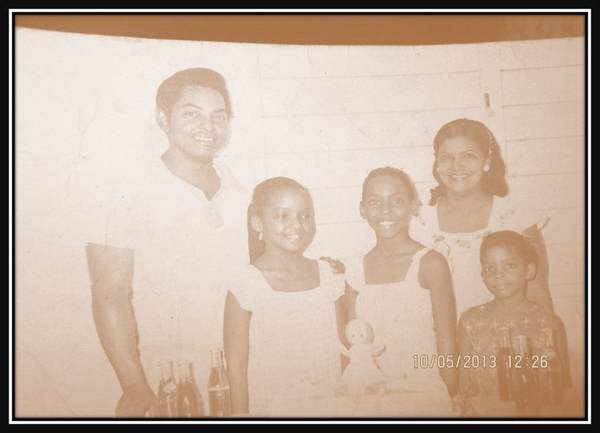
Tania and family in Cuba, early 1980s

Tania and family in Cuba, late 1970s
Tania is second from left, next to her father.

Tania Vazquez Paldi was born in Cuba in 1968, the early days of the Revolution. Because of her talent for languages, she was placed as a tour guide after university. This was in 1991, after the fall of the Soviet Union left Cuba in dire economic circumstances. Tourism was one way the Cuban government hoped to make up for the loss of Soviet support and a great effort went into its development. Tania worked as a tour guide for about 10 years and then went to work in the sales and marketing department of the Spanish hotel chain, Melia, in which capacity she left the Caribbean for the first time to travel extensively around Europe, Mexico and Canada. A few years into that job, she met Ronen Paldi, owner of Ya’lla Tours. Almost 2 years ago, after many months of bureaucratic wrangling in the U.S. and in Cuba, Tania moved from Cuba to Portland, Oregon and married Ronen. She did not defect and is able to travel between the U.S. and Cuba freely.

The above is just the barest outline of a very interesting life. For details and first-hand accounts of her life in Cuba, growing up with the Revolution, we plan to post a series of interviews here on the blog. Tania and I launched this project last Saturday morning, November 9,  over lattes and delicious baked things at Behind the Museum Cafe in downtown Portland. I recorded our conversation and hope to post the audio here as well as the transcript. Although our voices are clear, the volume of the background cafe noise just crosses the line from ambient to disruptive. It remains to be seen whether I can edit that down to a level which adds atmosphere to our conversation without distracting from it.

In the meantime, here’s the transcript of the first few minutes of our chat.

Kyna: I know you were very young, but do you remember being aware of the changes happening in Cuba in the 1960s?

Tania: My childhood in general was very nice. Of course, as a child, I didn’t know what was outside the country, right, other than what we had. What we had was a government that was providing everything; it was controlling everything – information, communication. But we were happy in terms of, we had school, we had everything provided – the uniforms, the food, the lunches, the books. We just had to go and study. We didn’t have to worry about anything, just go and study.

My parents, they were both working. In the case of my father, he was in the army, a lieutenant, and he was an engineer also, for fighter planes. I always see him as an example to follow. He was very smart; he was very encouraging. He always encouraged me to study, to make my own future, so I will always depend on myself. I always follow his example. I had a very good example at home.

Kyna: Did the Revolution change opportunities for women, in general?

Tania: Oh yes, it was a social revolution, not only in the economic point of view but also socially. Women before, you know the macho mentality in Cuba, the women could have a job before, my grandmother had a job before, but the jobs you could get, they were the lower standards, badly paid. The opportunities were not the same, unless you came from a rich family and you could study at college, but that was a very low minority. The majority, they could probably get a job as a maid, or something like that. So a fact of the Revolution was that women were emancipated, to the extent that they could vote, they could study, they could drive, they could do things that before was like, kind of a taboo.

Kyna: They had equal rights under the law, but socially, was there resistance to that? Do you remember?

Tania: I don’t remember very well, but I remember the difference between my grandmother and my mother. I could see the difference in generations. My grandmother, to the very late days of her life, she was like – a woman has to be submitted to her husband and the house, you know, like the old generation thought. My mom was different, she studied at school, she went to college. She couldn’t finish her studies because she got pregnant with myself and then my sister. She couldn’t finish and that really damaged her dreams but she was always willing to work and she was used to working in different jobs. When she was a student, she went to the countryside to teach the farmers how to read and write, which was part of the Revolution too. The Literacy Campaign happened in two stages of the first 20 years of the Revolution to upgrade the level of education of farmers and people in remote areas.

Kyna: Even adults?

Tania: Yes, and there was resistance. Precisely in the countryside because they felt ashamed of a child or a kid, a teenager, coming to your home to teach you how to read and write.

Kyna: This was mandatory?

Tania: That was mandatory. Of course, you had senior people, like 70 or 80 years old, who didn’t want, at that stage, to study, but at least they were satisfied because they could learn how to read. That was mandatory. That’s what makes Cuba so special, among the Latin American countries, that is the only country that has zero percent illiteracy. That is so important, that the people are educated and politically educated.

Kyna: Politically educated by the government.

Tania: We were indoctrinated, yes. That really made the Revolution different from others in the world. Why? Because the people could appreciate (and that was what the government obviously wanted) what they had compared to other countries that didn’t have so and so, you know, different social… let’s say “perks” that we couldn’t have before the Revolution.

It was a revolution in all senses of life, for example racially. There was discrimination before the Revolution and after that, it had to be eliminated. It was mandatory for people not to discriminate in public places. So they had to accept people of color in certain jobs that before were not. I know that because of my grandmother on my father’s side, she’s black and she’s still alive. She’s 92 and she remembers those days at the beginning. She went to a shop, a beautiful department store in Havana, where only wealthy people could go and people of color, forget it; they were not allowed to go and buy stuff there. So, when the Revolution triumphed, she went there with some money that my father gave her to buy some stuff. People were afraid to go inside that store, the people of color, and she did. She started to ask for stuff there and the clerks were kind of in shock or surprised or amazed watching her. She knew that they didn’t want to serve her. “What is happening?” she asked the clerk and he said, “Madame, do you know we are not allowed to sell to people of color?” She had to laugh and said, “Are you crazy? Don’t you listen to the news? Don’t you see there’s a revolution outside that already triumphed?” The guy was so embarrassed that he went to talk to his manager and then he had to serve her.

Kyna: He thought the old rules still applied.

Tania: He knew it had changed but the owner was still the old owner… So when she went outside with all the stuff all the ladies that were waiting said, “How did you??” And she said, “Just go. Go and buy. If you have the money, go and buy.” She has always told me that story. Though she was very poor, she couldn’t afford education, she had to work very hard her whole life, like laundry and ironing and she made a living.

Kyna: So, she was one taught to read after the Revolution?

Tania: She knew how to read and write very basic; her family could afford very basic, like primary, but no high school.

Stay tuned for more of my conversation with Tania. I have so many more questions for her!

CLICK TO READ PART 2.

Ful Medames, Beans for Breakfast, the Egyptian Way

yahalla-grocery

Ful Medames, or simply ful (fava or broad beans), is a staple across the Middle East, but especially in Egypt, where the common belief is that it was passed down from the pharaohs. I first had ful for breakfast in Cairo. It has all the elements of my favorite guilt-free comfort foods (guilt-ful comfort foods are in a category of their own) – simple but flavorful, hearty but light – the earthiness of beans contrasted with the cool crunch of fresh vegetable garnish, joined by the bright richness of extra virgin olive oil and the tang of lemon juice.

I first tried to make ful myself about eight years ago, without success. Apparently this was before I realized pretty much every question could be answered on the Internet. I cooked several pots of dried fava beans but couldn’t get them soft enough. Obviously I wasn’t very motivated. I have plenty of Egyptian friends, not to mention Jordanian, Turkish, Lebanese and Syrian friends and acquaintances who would have shared their ful recipes and techniques.

Recently I was having dinner with a group of friends in Portland, including one whose grandparents immigrated to the US from Syria. We talked about her family in Syria, what life is like for them as their country is torn apart. They are in a small village outside of Damascus and, for now, everyone is safe. She talked about her visit to Syria, before the war, and how her aunt would get up before dawn every day and prepare great spreads of beautiful food, with the most basic of tools. We were eating a delicious Northwest-chic meal but both started to pine for the ancient peasant foods of the Middle East. Then it occurred to me to ask her about ful. Yes! She makes it all the time. “Use canned beans,” she said. “I do.” My hopes and craving for ful were restored. I can open a can.

I have a great little Mediterranean grocery in my neighborhood and as I walked to buy some cans of ful beans, I couldn’t escape the little voice in my head. “Cheater,” it said. “The pharaohs did not eat canned ful.” So, I asked the Lebanese shop keeper how they make ful for the restaurant next door. The secret is to use dried baby beans. The skin on the mature beans is too tough. Even after soaking and cooking, mature beans must be peeled in order to mash up properly for ful medames. To avoid the labor of peeling the beans, use baby beans.

To be honest, I’m not sure “baby” is technically correct. The beans you want are small and brown.

I decided to try it both ways, with beans from a can and with cooked dried “baby” beans, and compare the results.

Measurements are all to taste.

Ful with canned beans
1 can ful beans
1 small onion, finely chopped
2-3 cloves crushed garlic
1 teaspoon ground cumin
1/2 teaspoon cayenne pepper
1/4 teaspoon salt
extra virgin olive oil
juice of 1/2 lemon

Cook the onion in olive oil until soft. Add the garlic and saute until fragrant. Add the can of beans, with liquid and let simmer for about 15 minutes. Add spices, salt, lemon and mash everything together with a fork or potato masher.

Ful from scratch
2 cups dried baby ful beans
1 large onion, finely chopped
4-6 cloves crushed garlic
1 large tomato, chopped
1 tablespoon ground cumin
1 teaspoon cayenne pepper
1/2 teaspoon salt
extra virgin olive oil
juice of 1 lemon

Soak the beans over night. Saute onion, garlic, cumin, cayenne in olive oil for a minute or two in a large pot. Add drained beans, cover with fresh water and simmer, covered on very low heat until beans are soft, about 2-3 hours. Check the pot regularly and add water if necessary. When the beans are tender uncover and let the liquid reduce. Smash some of the beans against the side of the pot with a spoon to thicken the sauce. Add tomato and cook until the beans are thick but not too dry, still soupy. (The consistency is a matter of taste. I like it runny but not wet, thick but not dense.) Add salt and lemon juice just before serving.

Garnish to taste and serve with pita bread.

Garnish
There are a variety of garnishes to be used in quantities and combinations to your liking. These are the ones I know of:
chopped or sliced onion, use a sweet or mild onion
chopped green onion
chopped cucumber
chopped tomato
chopped parsley
chopped olives
chopped boiled egg or a fried egg
drizzled extra virgin olive oil
drizzled tahina
feta cheese
labneh
yogurt

Now that I have cooked and eaten a bowl each of ful from a can and ful from dried beans, I declare both totally satisfying. The only drawback I see from using the canned beans is the left over can. I foresee eating this dish often enough that I’ll feel better about using bulk dried beans.

Who’s a Pretty Birdie? The Amorous Parrot of Tusan

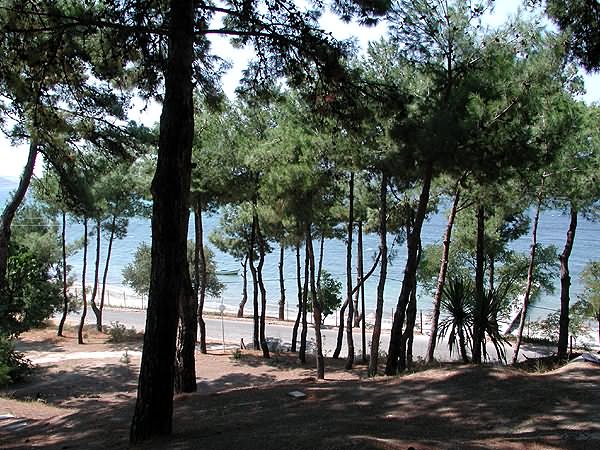
view from Tusan Hotel, Canakkale, Turkey

view from Tusan Hotel, Canakkale, Turkey

About 9 miles outside of Canakkale Turkey, nestled in a pine forest overlooking the Dardanelles Strait, is the Tusan Hotel. For accommodations, it’s nothing fancy, but it’s clean and comfortable with a homey charm. The hotel’s best asset is its position.
The buildings are surrounded by pine trees spaced perfectly to let in plenty of dappled light and nicely framed views of the water while still providing a sense of woodsy shelter. We use the hotel in our Bronze category.

I stayed there a few years ago while escorting a group of travel agents around Turkey. It’s close to Troy, which we visited the following day. After dinner, I played a few games of backgammon with our driver in the sitting room off the lobby. I was the only woman among 5 or 6 men, gathered to watch and comment on the game. After about an hour, I said goodnight and headed off to my room.

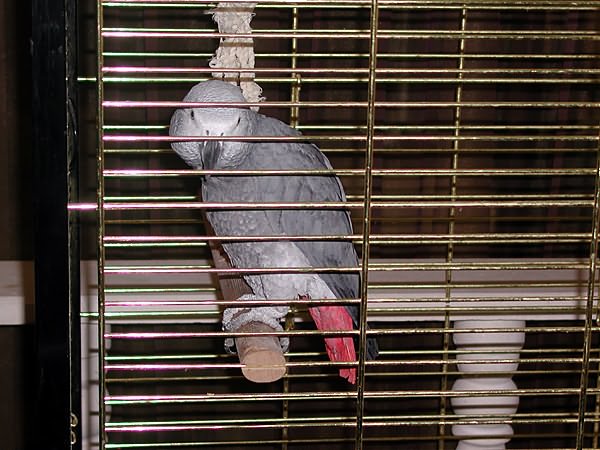
In the lobby of the Tusan is a beautiful gray parrot. I stopped to admire him and tell him what a pretty bird he was. He came right over to me and I stuck my finger through the bars of the cage to give him a scratch. To my delight he perched on my finger. Then, to my horror, he began to have his way with my finger, vigorously. ( I won’t use the most descriptive word for what he was doing, as this is meant to be a professional blog, but it rhymes with jump…) I couldn’t get away! People were walking through the lobby and there I stood, the captive of an obscene bird. It felt like a public shaming. I guess I stood like that for five minutes, although it seemed like an eternity, when one of the men who had been watching the backgammon game came to my rescue. He worked at the hotel and was familiar with this bird and his tricks. He lured him off me with some treat that was even more delectable than my finger. I suggested they put a sign on the cage warning fools like me to keep fingers outside.

Image

Yes, we’re talking about you.

To see our Turkey tours, visit http://www.yallatours.com/turkey/.

3 Favorite Packing Accessories

When I was a kid, I loved packing because it meant we were about to travel somewhere. I also loved flying. How times have changed… Now flying is plain agony for me and packing is a chore. Journey schmourney. Sometimes the joy is in the destination and the best we can do is survive the journey and arrive with everything we need, neatly packed in an efficient and organized fashion.

So, without further ado, I present my favorite packing accessories fromTravelSmith, three tools that make packing fun, almost.

Shelves to Go
This is brilliant – a hanging shelf unit that collapses into your suitcase. Hang it in your closet, pack the shelves, put it in your bag. The shelves keep their contents contained and organized. At your destination, lift the shelves out of your bag and hang them in the closet. Your clothes are out where you can see them and access them easily, without having to unpack.

Large Shelves To Go
Open: 20″L x 12″W x 23″H. 1 lb. 12 oz

Small Shelves To Go
Open: 18″L x 12″W x 23″H. 1 lb. 8 oz.


Packing Envelopes
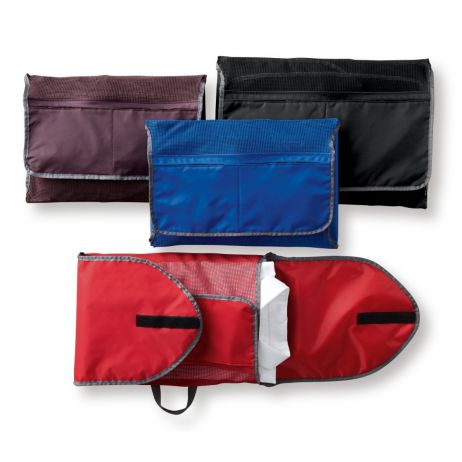
These not only organize your bag but keep clothes neatly folded and wrinkled free. They come with a folding board, very helpful.

Large TravelSmith Smart Envelope
18″L x 12″W. 14.3 oz.. Holds 4-5 jackets, skirts or pants.

Small TravelSmith Smart Envelope
15″L x 10″W. 10.7 oz.. Holds 6-8 shirts, skirts or pants.

packing envelopes

packing envelopes

Compress-it Cube
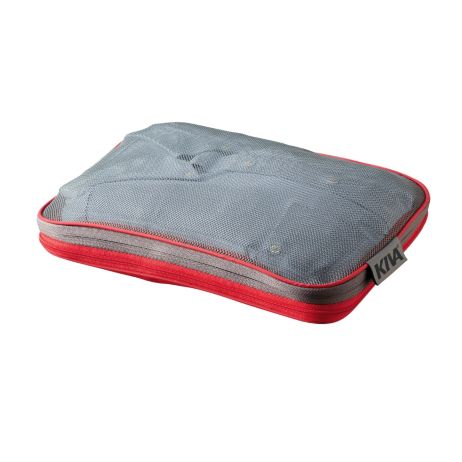
Compress a 5″ stack of clothes to 1″ with magic zippers. You can take five-times more clothes!

KIVA® Large Compress-It Cube
10½”W x 1½”D x 13½”H. 5.75 oz.

KIVA® Small Compress-It Cube
10″L x 7″W x 5″H. 4 oz.

Compression Cuba

Compression Cuba

Travelers with Ya’lla Tours get a discount on TravelSmith purchases!

The winner of this week’s drawing is Terry from the Hawaii General Store & Gallery in Seattle. You too can be a winner! All blog followers are entered. We draw a name every Wednesday. The current prize is a $10 Starbucks gift card.

Ya’lla Tours Hearts Travel Agents

Ya’lla Tours is one of those rare tour operators that does not solicit business from the public and that does not chase down your clients directly after you make a booking with us.

I cannot count how many time that I have sat in an office where the lament of the  travel agent and owner is that this individual (or group) booked and then XYZ Company came along and directly took the next booking from the individual or group. I also cannot count the number of times that that same agent and owner will book XYZ Company again.

Why?

The reasons vary: XYZ Company is preferred; XYZ Company is what this client wants; XYZ Company is less expensive than the others.

Another client is gone to XYZ Company.  For good.

Ya’lla Tours invests a lot in travel agents.  Every penny of the commission paid to you is worth it, because you deliver a better qualified client to us and we form a good relationship with you. We do not have a booking engine on our extensive website purposely, because we do not want the public to be on the site and booking things that many do not even understand.  Ya’lla Tours has done 113 agent educational FAM trips over the 20 years in business, and at the end of each trip, Ronen Paldi, President of Ya’lla Tours, will fly to Israel, to Turkey, to Morocco or Greece, to wherever and hold a day-long seminar on how to sell and market what you have just experienced with us, and why you should use Ya’lla Tours.

Ya’lla Tours does love (heart) travel agents.  We have proven it year after year, and you know what, we want and will ask for your support in turn.  Stop giving away your valuable clients to companies that promise the love but then jilt you in the end.  Travel agents, if you have preferred operators taking bookings directly or taking your clients, let your boss know and let your consortia know; that way we all stay in business and make some money.

Guest blogger Rich Davis, Ya'lla Tours USA Sales Manager, Midwest Region

Guest blogger Rich Davis, Ya’lla Tours USA Sales Manager, Midwest Region

3 Hotels We Love in Istanbul’s Old City

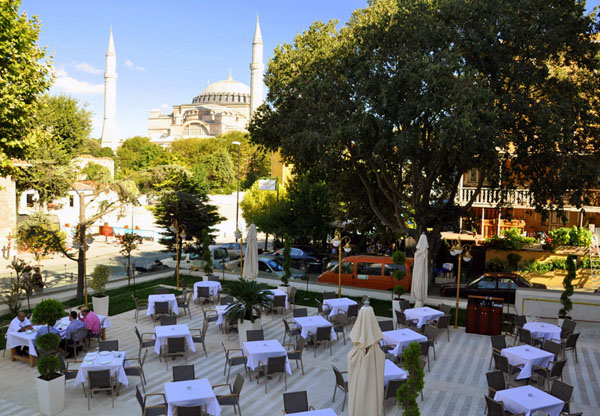
Hagia Sophia Hotel Istanbul Old City

This hotel’s best feature is its location in the heart of Sultanahmet. It’s practically on top of the Hagia Sophia Museum, the Blue Mosque (Sultanahmet Mosque) and the Basilica Cistern and an easy walk away from Topkapi Palace and the Grand Bazaar. It’s a modern hotel, converted from an existing building and opened in August of 2011. The rooms are clean and spacious and some offer sweeping views of the Hagia Sophia Museum. We use this 5-star hotel in the Diamond and Platinum categories of our Istanbul tours.

Hagia Sophia Istanbul Old City

Hagia Sophia Istanbul Old City

Hagia Sophia Istanbul Old City

Hagia Sophia Istanbul Old City

Continue reading

Saint Joan of the Worms

“Worms?  You brought worms?”

We were on a motor coach on a busy street In Havana, on a legal ministry trip to deliver lotions, soaps and medical supplies to the Cuban people, and this was the question as we gathered some of our supplies for a stop at one of the churches.

“I thought that was something you brought home with you,” said another traveler.

Laughs.

“Not real worms,” said Joan, the worm carrier.  “Fake ones.  For bait.”

Our trip through Cuba took us to a number of stops, but finally the right stop for the delivery of the worms took place not far from the Cuban home of Ernest Hemingway, the famous American author of The Old Man and the Sea.  Hemingway lived in Cuba from the 1930’s to just after the Cuban Revolution of 1959.  There he wrote and he drank and he was known as “Papa Hemingway.”

Not far from Finca Vigía or Lookout Farm, there is a bust of Hemingway  on a pillar near the sea. The motor coach stopped and while some of us – okay, only me – sat and relaxed in the heat of the sun, others, including Joan, walked to a nearby pier where children and men were fishing. That is where she delivered her worms.

I can only imagine the sight. A bus full  of Yanquis arrive from nowhere and deliver what might be the first rubber worms ever in Cuba to an unsuspecting village crowd one afternoon and then disappear forever. It might go down in Cuban legend and lore, especially if those worms catch some big fish.

And with every legend there is a hero or a heroine, and that would be our own St. Joan of the Worms. 

Saint Joan may get her own bust right next to “Papa Hemingway.”

ricardo
Guest blogger Rich Davis is the Ya’lla Tours Midwest regional sales manager.
He just returned from escorting a group in Cuba. Check out his previous posts RevisitingTrinidad de Cuba and The Old Man and His Pee.

Lost & Found in Wadi Rum

I visited Wadi Rum while co-escorting a group of about 30 with Rich Davis, our Midwest sales manager and frequent guest blogger. Our incomparable guide Ahmed was our true leader but we were there to make sure all services ran smoothly and keep track of everyone. It was a large group, so we were forever rounding up stragglers and counting heads. Of course our #1 responsibility was as keepers of The Box, but I mention this only as a cryptic allusion to another post sometime in the future.

Wadi Rum was towards the end of the 10-day tour of Jordan and was a highlight for me. I was very excited when our bus dropped us at the visitor center, where we were to board 4×4 vehicles and ride into the wadi and meet the bus on the other side. The visitor center consists of single story buildings and a wide open courtyard looking directly out at the famous Seven Pillars rock formation.

The 4×4 vehicles weren’t quite lined up when we arrived and the group was spread out around the center, looking at the displays, visiting the toilets etc. Like a nice hostess, I got in the end of the line for the restroom. When I went into the lady’s room my group was spread in all directions and the 4x4s had not arrived. When I came out 3 minutes later I didn’t see a single face I recognized.

Although it was true that I had been left behind, the thought was so inconceivable that it didn’t even occur to me until I had walked around the whole center and made a visual sweep of the outside perimeter 2 or 3 times. How does a group of that size disappear in 3 minutes? They were so gone I couldn’t even see their dust. Thirty scattered people coalesced, distributed into 6 vehicles and rode beyond the horizon, with their dust, in 3 minutes. I had been corralling these nice people for over a week and couldn’t fathom such a thing. It’s a mystery to this day.

I know what you’re thinking. OK, 5 minutes, max. I swear.

Just as I was realizing my situation a  handsome man in traditional dress approached and asked if I needed anything. I’m pretty sure he had been watching me circle and was way ahead of me. He took me to an office where I phoned Ahmed, who sent a truck back for me. Because they were split into so many vehicles, no one even knew I was missing.

A few minutes later a Bedouin-driven Toyota 4X4 blew up in a cloud of dust. I rode in the cab with the driver who drove very fast across the sand while peeling an orange and sharing it with me, section by section. He swerved abruptly a few times and I squealed involuntarily, which he found highly amusing. He chatted away in Arabic the whole ride, although I think I made it clear I didn’t understand him.

It was only 10-15 minutes before we reached the group, which was stopped to take in the astonishing scenery. The assumption was made that I had stayed behind to conduct important Ya’lla business. I did not dispel that myth. Only Rich and Ahmed knew the truth.

Read about Petra, biblical Jordan and border crossing between Israel and Jordan in previous posts.

Visit www.yallatours.com/jordan to see our Jordan tours, all privatly escorted and customizable.

The Old Man and His Pee

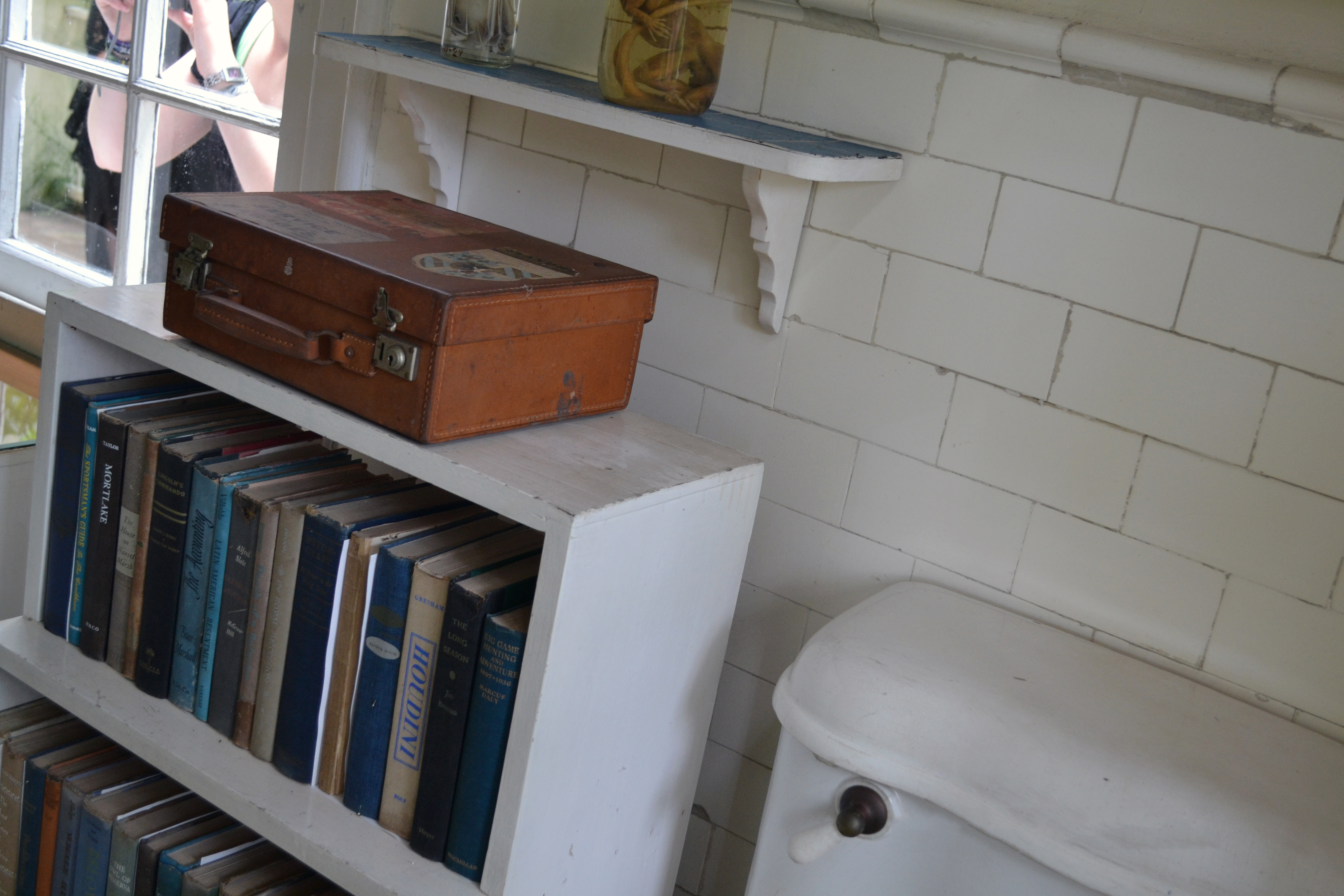
Hemingway's bathroom, Finca Vigia, Cuba

Hemingway’s bathroom, Finca Vigia, Cuba

Most all of us do it: we read while on the throne. Today that reading can be done with an iPad or the old-fashioned way, on paper.

While visiting Ernest Hemingway’s home on a legal trip to Cuba I became curious as to what the most famous American author of the 20th Century might have read while going potty.

Hemingway lived in Cuba from the 1930’s to 1960, when he left due to the Cuban Revolution of 1959.  He had a beautiful home just outside Havana called Finca Vigía or “Lookout Farm.” When Hemingway left Cuba the government took possession of his home. After his death in 1961, his widow was allowed to come back and take some personal things back with her, but the house remains as Hemingway left it, lined with books and trophies of his big game hunting days in Africa, and, of course, his reading material in the bano.

Hemingway and Cuba have quite a history together. Hemingway wrote a number of his famous novels there, including The Old Man and the Sea, which was based on a local fisherman. So intertwined with Cuba is Hemingway, that many people when visiting go to some of his favorite haunts, including his home and the El Floridita Bar, where the Daiquiri was invented.

We were on a legal trip to Cuba, whose purpose was to deliver much-needed goods to the Cuban people, such as soaps and lotions and medical supplies, but I had a chance to see what Hemingway read while pooping, so I examined the bookshelf next to the commode. You can only view it from the outside, as with all the rooms in the house, and I craned my neck to take a look at some of the volumes.  A few stood out.

One book was on the adventures of big game hunting and one other that caught my eye was a biography of Houdini.

Houdini was of course the famous escape artist of the early 20th Century, and I couldn’t help but wonder if, for all his bravado, whether Hemingway suffered from constipation and if he was reading about different escape methods that might have included ingested food.

The next time I go to Cuba, I will search out the el supremo story of what the most famous person in Cuba reads on his throne.

Fidel?

ricardo
Guest blogger Rich Davis is the Ya’lla Tours Midwest regional sales manager.
He just returned from escorting a group in Cuba. Check out his previous post written from Trinidad.

Petra, Stupefacente!

I’m trying to figure out how to write about Petra without resorting to overused, and thus meaningless superlatives and adjectives of wonder. The English language really needs some fresh words to describe truly impactful places and experiences. I considered making up some words of my own but made-up words are mostly just annoying.

How about we use Italian adjectives. Say them out loud with feeling; remember to pronounce all of the vowels and include exuberant hand gestures: MAGNIFICENTE! FORMIDABILE! MAGICO! STUPEFACENTE!! Now you get the picture.

I was stupefied by Petra. For me, the only other site that matches the stupefying effect of Petra is the Giza pyramids. I’m sure there are many other places that would strum a similar chord (Machu Picchu for one) but I haven’t been there yet.

I don’t mean to rank Giza and Petra the best places I’ve seen. I never know how to answer the question, “What’s your favorite place?” Every place has its own power. The Holy Sepulchre in Jerusalem, the Athens Acropolis, the Fez Medina, the Sahara Dunes…each strikes at a different angle and evokes a unique response. It’s a vibrational thing. I can attempt to categorize them but I can’t rank them.The Category of Stupefaction (TCS) encompasses stunning feats of design and engineering, with an element of mystery.

Within TCS I would make subdivisions. Petra’s being was commercial; so, coming from a highly commercial place and time myself, culturally it’s somewhat more relatable than Giza. The ancient Egyptian culture of Giza, despite all we know about it, is still quite alien (and I don’t mean ET alien, necessarily). Part of Petra’s effect is its spectacular physical setting. Giza is many things, but naturally beautiful is not one of them.

Thinking about the specific ways I’m moved by different places and why sent me on a bit of a tangent. Thank you for your patience. You got the abbreviated version, believe me.

Back to Petra, where I was stupefied by sprawling monumental remains of an elegant city carved into the red sandstone walls of a desert canyon.

Petra is entered through a long narrow split in the mountains called the siq. It’s about a mile long with 500 foot striated, undulating walls on either side, barely 10 feet across in some places. The whole way through, around every bend I was anticipating my first glimpse of Al Khazneh (the Treasury), Petra’s most famous monument, which is positioned to fill the hairline view through the end of the siq into the city. I had butterflies in my stomach, my heart raced a little. The walk through the siq is thrilling because of where it leads but it’s also incredibly beautiful in and of itself. Besides the natural loveliness, I noticed channels carved into the rock walls, which captured rain water to protect the city from flash floods and to create a man-made oasis. Petra’s sophisticated water works also included miles of ceramic piping from area springs and over 200 cisterns.

At my first sight of Al Khazneh, the rest of the world dropped away. I was conscious only of moving toward it. Then I was there, standing in the shadow, climbing the steps, feeling the cool stone. It’s real and more impressive than any photograph or breathless blog reminiscing can convey. And there’s so much more. Al Khazneh is just the beginning.

This slideshow requires JavaScript.

Petra was a city of 50,000 at its peak 2,000 years ago, built by the Nabateans, a nomadic Arab tribe that controlled the trade routes in the area. The city was established in the 6th century BCE as a hub for traders traveling from the east and south to the Mediterranean port at Gaza. Imagine the camel caravans carrying exotic products from China, India, Arabia and Africa en route to points across the Roman Empire.They all passed through this crack in the mountains and they paid to do so. Petra was fabulously wealthy.

The freestanding buildings are mostly gone. What remains are hundreds of rock-cut tombs, temples, theaters and dwellings. You need a full day in Petra, at the very least. If you want to really explore, take three days or more.

This slideshow requires JavaScript.

Petra is in southern Jordan, about 165 miles south of Amman and 85 miles north of Aqaba. You can do a day trip from Eilat in Israel or Aqaba, but it makes for a very long day (it’s about a 2.5 hour drive each way).I highly recommend spending at least one night at Petra. The town of Wadi Musa sits just outside the ancient site, serving Petra visitors much as Petra served itinerant traders back in the day.

Read about biblical Jordan and border crossing between Israel and Jordan in previous posts.