The Athens Acropolis

the acropolis of Athens can be seen from all over the city

the acropolis of Athens can be seen from all over the city

While most towns of any size in the ancient Greek world had an acropolis, the acropolis of Athens has come to define the word. In general, an acropolis is the high place of a city and a center for important religious and civic activities.

Most of what stands on the Athens acropolis today was built under the great Athenian leader Pericles in the last half of the 5th century BCE, a Golden Age of ancient Greece. Earlier buildings succumbed to the hands of time, natural disaster, and invading hoards. The Parthenon stands on an artificial hill made up of acropolis debris left over after the Persians sacked Athens in 480 BCE.

Click to see Greece tours that include a visit to the Athens Acropolis. Continue reading

Ariadne, Theseus & Dionysus: A Greek Love Triangle

Ariadne Giving Theseus a Ball of String to Find His Way Out of the Maze - 19th century painting by Pelagio Palagi

Ariadne Giving Theseus a Ball of String to Find His Way Out of the Maze – 19th century painting by Pelagio Palagi

In Greek mythology, the islands of Crete and Naxos were each the setting of different chapters in the life and times of the deified princess Ariadne. She was the daughter of King Minos of Crete and half-sister to the Minotaur, the part bull-part man conceived by her mother Pasiphae after a short affair with a bull. Continue reading

Dalyan, Turkey – Land of Lavish Lycean Tombs & Lucky Loggerhead Turtles

The small town of Dalyan is tucked into a bend of the very bendy Dalyan River on Turkey’s southwest coast, about 50 miles east of Marmaris and 35 miles west of Fethiye. The whole area, around 300 square miles, was established as a Special Environmental Protection Area beginning in the late 1980s. Although the protected status revolves largely around the endangered loggerhead turtle, which nests on a local beach, the area encompasses wetlands, fresh water lakes, rivers, a brackish water zone and rich agricultural lands.

Click to see our Magnifcent Turkey tour,
which includes a visit to Dalyan.

Continue reading

A Travel Agent’s Trip to Israel with Ya’lla Tours, Part 3

Another installment of a travel diary by Kelly Hyatt, who traveled to Israel in February of 2018 with a group of American travel agents. Thank you Kelly!

Read Part 1 here.
Read Part 2 here.

Church of the Nativity, Bethlehem

Church of the Nativity, Bethlehem

We had now made it to the most holy city in the entire world, Jerusalem. The first day we visited Bethlehem, just 6 miles to the south. We visited the oldest church in the holy land, the Church of the Nativity. Based on the local tradition that Jesus was born in a cave at the edge of the village, the church was built over the site of the cave. We saw the Shepherd’s Fields, where Boaz met Ruth.

the Garden of Gethsemane on the Mount of Olives, Jerusalem

the Garden of Gethsemane on the Mount of Olives, Jerusalem

Then, after a yummy Arabic lunch in Bethlehem, we returned to Jerusalem, to the Mount of Olives, where we had our first view of the Old City walls and the Dome of the Rock. We proceeded to walk down the Palm Sunday road to the Church of Gethsemane, in the Garden of Gethsemane, the site of the agony of Jesus.
The old city called but that day was ended and we returned to the hotel for dinner and reflection.

The next day, it was raining and we first visited the Church of Peter Galicantus also called Caiaphas Palace, which held a cistern where Jesus was held before being taken to Pilate for his trial. Then we proceeded to the City of David where you can see the excavations revealing the earliest days of Jerusalem.

We entered into the amazing Hezekiah’s Tunnel and learned how the water from the only spring in Jerusalem was protected and got into the city. Here we joined Israeli school children who were on their own field trip, learning about their own history.

Holy Sepulchre, Jerusalem

Holy Sepulchre, Jerusalem

At the Zion Gate, you can still see bullet holes from the six days war. We walked the Via Dolorosa to the Church of the Holy Sepulcher to see the place where some traditions hold to be where Jesus was crucified and buried. It was Ash Wednesday and the place was full of people from every religion.

the Garden Tomb, Jerusalem

the Garden Tomb, Jerusalem

We then went thru the Muslim Quarter and out of the city walls to the Garden Tomb, near the place of the skull (Golgotha), another place where some traditions hold to be the place of crucifixion and burial.

the Shrine of the Book, Israel Museum, Jerusalem

the Shrine of the Book, Israel Museum, Jerusalem

scale model of Jerusalem, Israel Museum, Jerusalem

scale model of Jerusalem, Israel Museum, Jerusalem

The next day we went to the Israel Museum to see the Shrine of the Book, where the Dead Sea scrolls are kept, and a full scale-model of Jerusalem during the time of Jesus. The model really put in perspective the way it was, compared to the way it is now. And we were each able to reconcile our own belief and faith in which of the two places of crucifixion and burial we felt was right from our hearts Thene visited Mt Zion and saw King David’s Tomb and the Last Supper Room

Yad Vashem Holocaust Memorial, Jerusalem

Yad Vashem Holocaust Memorial, Jerusalem

Next was a very special moment that I wish every person in the world could experience. We visited Yad Vashem, the Israeli Holocaust Museum. Before we went into the grounds we visited a place called the Valley of the Communities. Here Ya’lla Tours had arranged for a Jewish cantor to come and pray the Lord’s Prayer and sing a Hebrew song. The song of the Holocaust was perhaps the most moving thing I have ever heard in my life. Then having the opportunity to visit the museum, brought it all to a reality that I had never experienced and likely will never again.

the Western Wall, Jerusalem

the Western Wall, Jerusalem

Later that day, several of us went back to the old city on our own and we made time to go to the Western Wall and pray. We all put our paper prayers into the cracks of the wall and then went shopping!!!!

Masada

Masada

On the last day of our tour we went back out of Jerusalem and down to the Dead Sea. We drove to the massive fortress of Masada. A place that defies reality. The Dead Sea is the lowest place on earth and the mountain fortress of Masada towers over the area and even though it rises to a height of about 450 meters it is only 58 meters above sea level. This is a magical place. Herod the Great built a massive fortress there and in 72AD, the 10th Roman legion, during a monumental siege, used an astounding ramp to conquer the fortress and end the revolt of the Jewish Zealots. The attack ramp, the Roman camps and fortifications that encircle the mesa have survived to this day.

From here we stopped at Qumran, where the Dead Sea Scrolls were found and then on to the beach for a float in the Dead Sea!!!!

As we made our way back to Jerusalem, we saw Bedouin sheep herders moving their sheep in for the night and the sun was setting in a most beautiful way. We all felt that we were blessed beyond measure to have been on such a tour with such a fun group of people and the best guides you could ever wish for.

I want to thank my tour guide Zvika for making me want to be a better Christian and to Jane V and Ronen of Ya’lla tours for putting together such a great trip and for teaching me so much about the destination of Israel. The one place on earth that every person should visit at least once in their life.
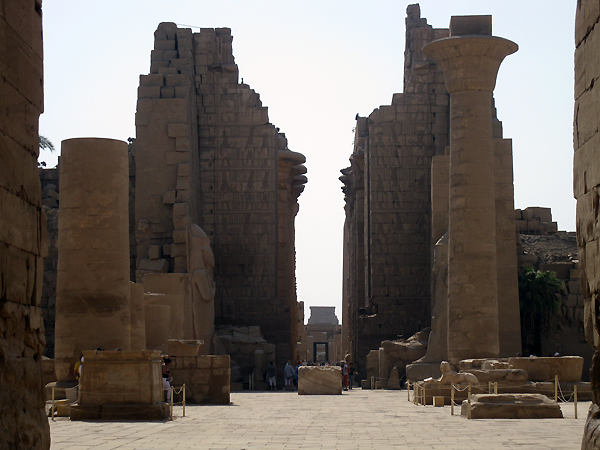
Karnak the Magnificent

What Luxor, Egypt attraction is the largest place of worship ever built?

It doesn’t take a wizard to proclaim the magnificence of Karnak Temple in Luxor. After the pyramids at Giza, it’s the 2nd most visited site in Egypt. It’s really a temple complex, with multiple temples added and embellished by a long series of pharaohs over the course of 2,000 years. It was known to the ancient Egyptians as The Most Sacred Place and is reputed to be the largest place of worship ever built anywhere.

Click to see Egypt tours that include visits to Karnak Temple. Continue reading

Crete

Knossos fresco

Knossos fresco

Crete is the largest of the Greek islands, 160 miles long and 37 miles across at the widest point, located 99 miles south of Athens at the very southern border of the Aegean Sea and of the European continent. One blog post will not do justice to Crete’s many, diverse attractions but we’ll take a stab at an informative overview.

Crete was the center of the highly sophisticated, pre-Greek Minoan civilization which thrived from approximately 3,000 BCE until it vanished about 1,500 years later. Its main city was Knossos but it had settlements all over Crete, around the Aegean, and even on mainland Turkey. At its height, Minoan influence rivaled that of ancient Egypt.

Most tourism development on Crete is on the north coast of the island; some areas are densely packed with mass market facilities. The main centers are Heraklion, Chania, Hersonnisos and Elounda.

Venetian Harbor, Heraklion

Venetian Harbor, Heraklion

Heraklion is the commercial and administrative center of Crete, the major city on the island and one of Greece’s largest cities, not so much a tourist destination as a hub for air and sea traffic. It is, however, a sophisticated city with excellent dining, shopping and nightlife and its proximity to Knossos and world-class archaeological museum are reason enough to spend at least a few hours in Heraklion.

Phaistos

Phaistos

Knossos is 3 miles from Heraklion. It’s the most thoroughly restored of Crete’s Minoan ruins but the accuracy of the restoration is questionable and has a bit of a theme park feel. For less flashy but still very grand Minoan ruins, see Phaistos, about 40 miles southwest of Heraklion, and Aigia Triada, a few miles from Phaistos. Artifacts from the Minoan sites can be viewed at the excellent Archaeological Museum in Heraklion.

Venetian Harbor, Chania

Venetian Harbor, Chania

Chania is an exceptionally picturesque little city, especially the well-preserved old city with Venetian and Ottoman buildings clustered around the harbor.

On the far northeast end of the island, about 50 miles from Heraklion, is Elounda, mostly known for luxury resorts.

White Mountains (Lefka Ori), Crete

White Mountains (Lefka Ori), Crete

Crete’s interior is mountainous and cut through with stunning gorges. A serious hiker can easily spend weeks trekking about. More casual hikers should check out sections of the coast-long E4 trail, especially in the White Mountains near Chania and the Psiloritis Mountains near Heraklion. The Samarian Gorge, near Chania, is a very popular day hike.

There is a great variety of beaches on Crete, from long and sandy to short and rocky. In general, those on the north coast are more crowded than those on the south coast. Knowing when you’ll be there and specifically what you desire in a beach experience will help us suggest where to go.

During season (April-October), there are multiple daily flights from Athens to Chania, Heraklion and, to a lesser degree, the new airport at Sitia. Flights from Rhodes and Santorini in high season are also a possibility.

Cruise ships dock at Heraklion. Ferries travel from Athens to Heraklion and Chania and from Santorini and Rhodes to Heraklion.