Madam King: Hatshepsut of Egypt

Temple of Hatshepsut, near Luxor, Egypt

Temple of Hatshepsut, near Luxor, Egypt

Hatshepsut was the daughter of the early New Kingdom pharaoh Thutmose I and his queen. The only surviving son of Thutmose I was by a secondary wife. In terms of dynastic succession, this was not an ideal situation. Still, a son by a secondary wife, was better than a daughter by the queen. As was the custom, Hatshepsut married this son of a secondary wife, her 1/2 brother Thutmose II, and became his queen. Together, Hatshepsut and Thutmose II had one daughter, no sons. But Thutmose II did have a son with a lesser wife, just in the nick of time. When Thutmose II died, Queen Hatshepsut became regent for her infant stepson, Thutmose III. Continue reading

NAME THAT COUNTRY

Along the banks of the longest river on earth (or the 2nd longest, depending on who you ask), life proceeds much as it has for 8,000 years, at least. Until it was dammed in the early 19th century, the annual flooding of the river left rich silt in its wake and the fertile fields fed the country and exported wheat and other grains far beyond its borders. The cultural sophistication and political and economic power of the country’s ancient civilization can be directly linked to the river. Today, the river still provides almost all of the country’s water but dams control the flow and provide hydroelectric power.


Can you name that country? 
See below for answers.

Continue reading

Karnak the Magnificent

What Luxor, Egypt attraction is the largest place of worship ever built?

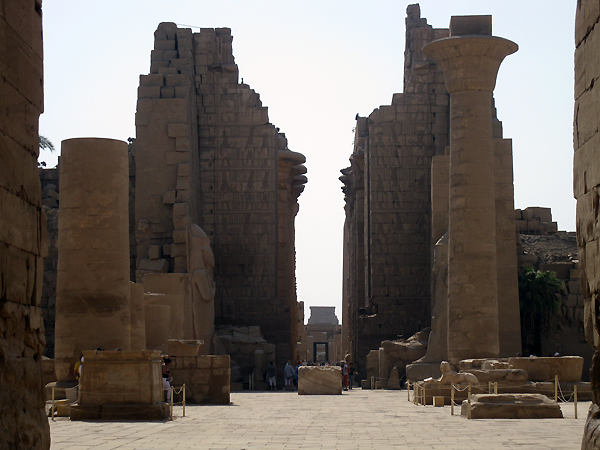
It doesn’t take a wizard to proclaim the magnificence of Karnak Temple in Luxor. After the pyramids at Giza, it’s the 2nd most visited site in Egypt. It’s really a temple complex, with multiple temples added and embellished by a long series of pharaohs over the course of 2,000 years. It was known to the ancient Egyptians as The Most Sacred Place and is reputed to be the largest place of worship ever built anywhere.

Click to see Egypt tours that include visits to Karnak Temple. Continue reading

NAME THAT COUNTRY

Pictured above is a mortuary temple built for the female king, Hatshepsut, who ruled some 3,500 years ago. She was among her country’s most successful rulers, reigning for over 21 years. The temple is located at the base of towering cliffs at Deir el-Bahri in the Theban necropolis, not far from the Valley of the Kings.

After her death, Hatshepsut’s successor had her image and name stricken from most monuments and she was lost to history until modern times.


Can you name that country? 
See below for answers.

Continue reading

NAME THAT COUNTRY

This national museum houses objects from 5,000 years of local history. Artefacts from prehistory, Old Kingdom, Middle Kingdom, New Kingdom periods, Intermediate periods, and the Greco-Roman period. On display are enormous statues and opulent burial items of ancient kings such as the Amenhoteps (including the heretic Akhenaten), the Ramesses and the Setis; objects found at the ancient capitals of Memphis and Thebes and much, much more!


Can you name that country? 
See below for answers.

Continue reading

Old Cairo

Everyone knows about ancient Egyptian attractions in the Cairo area – the pyramids at Giza being the most famous, by far. While there were important settlements nearby for thousands of years, the city of Cairo proper originated with the Roman Fortress of Babylon in the 3rd century. The fort was built on the banks of the Nile around a harbor and the Nile-end of a canal that connected the river with the Red Sea. This had long been a strategic area, the border of Upper and Lower Egypt, where the river begins to spread out into the delta, only a few miles north of the ancient Egyptian capital of Memphis, which dates back to 3,000 BCE, at least.

Roman walls of the Babylon Fortress in Old Cairo

Roman walls of the Babylon Fortress in Old Cairo

The Roman fort still stands, surrounding the area known as Old Cairo or Coptic Cairo. Coptic Christians settled within the fort very early in the Christian era and it remains a Coptic enclave still. The fort encloses numerous churches, monasteries and convents, as well as the Ben Ezra Synagogue and Amr Ibn al-As, Cairo’s oldest mosque.

The main attractions:

St. Virgin Mary’s Coptic Church/The Hanging Church (El Muallaqa) is the most famous church in Old Cairo. It’s built atop the bastions of one of the fortress gates, with the nave hanging over the passageway.

the Hanging Church, Old Cairo

the Hanging Church, Old Cairo

Saints Sergius and Bacchus Church (Abu Serga) stands on ground where, according to tradition, the Holy Family stayed on their flight away from the murderous Herod the Great.

Church of Saints Sergius and Bacchus, Old Cairo

Church of Saints Sergius and Bacchus, Old Cairo

The Greek Orthodox Church of St. George is built around a tower of one of the fortress gates. A peaceful cemetery stands within the grounds of the church.

St. George's Greek Orthodox Church, Old Cairo

St. George’s Greek Orthodox Church, Old Cairo

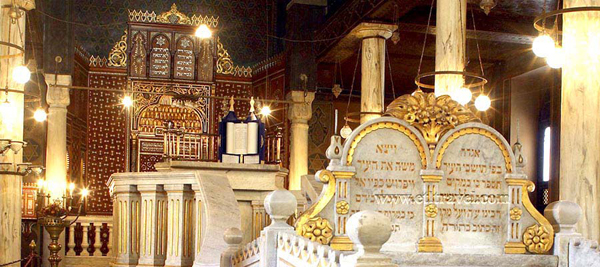
Originally a church, the Ben Ezra Synagogue was established in the 9th century, when Abraham Ben Ezra purchased the building from Coptic Christians who needed to raise money for taxes.
Amr Ibn al-As Mosque is Cairo’s oldest mosque. It was built in the 7th century for the commander of the first Arab army to conquer Egypt.

This quiet, atmospheric area feels worlds away from the surrounding chaos that is Cairo. It’s well worth a few hours of exploring.

Click to see Egypt tours that include visits to Old Cairo.
NAME THAT COUNTRY

Known as the Colossi of Memnon, these two statues of Amenhotep III have stood on this spot for well over 3,000 years. They were dubbed Memnon by ancient Greek tourists after their mythological hero. Memnon was the son of Eos, the goddess of dawn and it was said that sounds came from one of the statues (the one on the right in this picture) at or near dawn.The statues are 60ft tall and weigh over 700 tons, each.


Can you name that country? 
See below for answers.

Continue reading