Growing Up in Cuba, An Interview with Tania Vazquez Paldi – Part 1

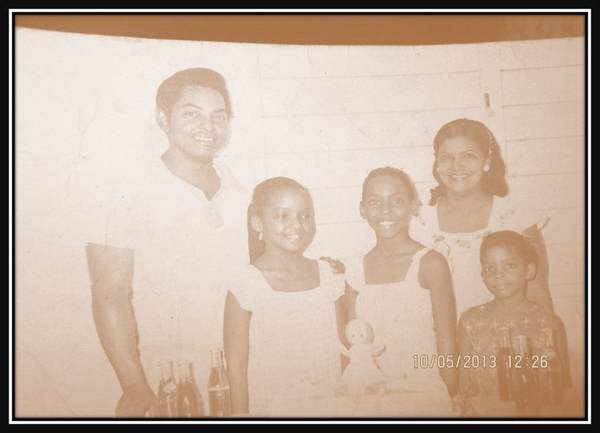
Tania and family in Cuba, early 1980s

Tania and family in Cuba, late 1970s
Tania is second from left, next to her father.

Tania Vazquez Paldi was born in Cuba in 1968, the early days of the Revolution. Because of her talent for languages, she was placed as a tour guide after university. This was in 1991, after the fall of the Soviet Union left Cuba in dire economic circumstances. Tourism was one way the Cuban government hoped to make up for the loss of Soviet support and a great effort went into its development. Tania worked as a tour guide for about 10 years and then went to work in the sales and marketing department of the Spanish hotel chain, Melia, in which capacity she left the Caribbean for the first time to travel extensively around Europe, Mexico and Canada. A few years into that job, she met Ronen Paldi, owner of Ya’lla Tours. Almost 2 years ago, after many months of bureaucratic wrangling in the U.S. and in Cuba, Tania moved from Cuba to Portland, Oregon and married Ronen. She did not defect and is able to travel between the U.S. and Cuba freely.

The above is just the barest outline of a very interesting life. For details and first-hand accounts of her life in Cuba, growing up with the Revolution, we plan to post a series of interviews here on the blog. Tania and I launched this project last Saturday morning, November 9,  over lattes and delicious baked things at Behind the Museum Cafe in downtown Portland. I recorded our conversation and hope to post the audio here as well as the transcript. Although our voices are clear, the volume of the background cafe noise just crosses the line from ambient to disruptive. It remains to be seen whether I can edit that down to a level which adds atmosphere to our conversation without distracting from it.

In the meantime, here’s the transcript of the first few minutes of our chat.

Kyna: I know you were very young, but do you remember being aware of the changes happening in Cuba in the 1960s?

Tania: My childhood in general was very nice. Of course, as a child, I didn’t know what was outside the country, right, other than what we had. What we had was a government that was providing everything; it was controlling everything – information, communication. But we were happy in terms of, we had school, we had everything provided – the uniforms, the food, the lunches, the books. We just had to go and study. We didn’t have to worry about anything, just go and study.

My parents, they were both working. In the case of my father, he was in the army, a lieutenant, and he was an engineer also, for fighter planes. I always see him as an example to follow. He was very smart; he was very encouraging. He always encouraged me to study, to make my own future, so I will always depend on myself. I always follow his example. I had a very good example at home.

Kyna: Did the Revolution change opportunities for women, in general?

Tania: Oh yes, it was a social revolution, not only in the economic point of view but also socially. Women before, you know the macho mentality in Cuba, the women could have a job before, my grandmother had a job before, but the jobs you could get, they were the lower standards, badly paid. The opportunities were not the same, unless you came from a rich family and you could study at college, but that was a very low minority. The majority, they could probably get a job as a maid, or something like that. So a fact of the Revolution was that women were emancipated, to the extent that they could vote, they could study, they could drive, they could do things that before was like, kind of a taboo.

Kyna: They had equal rights under the law, but socially, was there resistance to that? Do you remember?

Tania: I don’t remember very well, but I remember the difference between my grandmother and my mother. I could see the difference in generations. My grandmother, to the very late days of her life, she was like – a woman has to be submitted to her husband and the house, you know, like the old generation thought. My mom was different, she studied at school, she went to college. She couldn’t finish her studies because she got pregnant with myself and then my sister. She couldn’t finish and that really damaged her dreams but she was always willing to work and she was used to working in different jobs. When she was a student, she went to the countryside to teach the farmers how to read and write, which was part of the Revolution too. The Literacy Campaign happened in two stages of the first 20 years of the Revolution to upgrade the level of education of farmers and people in remote areas.

Kyna: Even adults?

Tania: Yes, and there was resistance. Precisely in the countryside because they felt ashamed of a child or a kid, a teenager, coming to your home to teach you how to read and write.

Kyna: This was mandatory?

Tania: That was mandatory. Of course, you had senior people, like 70 or 80 years old, who didn’t want, at that stage, to study, but at least they were satisfied because they could learn how to read. That was mandatory. That’s what makes Cuba so special, among the Latin American countries, that is the only country that has zero percent illiteracy. That is so important, that the people are educated and politically educated.

Kyna: Politically educated by the government.

Tania: We were indoctrinated, yes. That really made the Revolution different from others in the world. Why? Because the people could appreciate (and that was what the government obviously wanted) what they had compared to other countries that didn’t have so and so, you know, different social… let’s say “perks” that we couldn’t have before the Revolution.

It was a revolution in all senses of life, for example racially. There was discrimination before the Revolution and after that, it had to be eliminated. It was mandatory for people not to discriminate in public places. So they had to accept people of color in certain jobs that before were not. I know that because of my grandmother on my father’s side, she’s black and she’s still alive. She’s 92 and she remembers those days at the beginning. She went to a shop, a beautiful department store in Havana, where only wealthy people could go and people of color, forget it; they were not allowed to go and buy stuff there. So, when the Revolution triumphed, she went there with some money that my father gave her to buy some stuff. People were afraid to go inside that store, the people of color, and she did. She started to ask for stuff there and the clerks were kind of in shock or surprised or amazed watching her. She knew that they didn’t want to serve her. “What is happening?” she asked the clerk and he said, “Madame, do you know we are not allowed to sell to people of color?” She had to laugh and said, “Are you crazy? Don’t you listen to the news? Don’t you see there’s a revolution outside that already triumphed?” The guy was so embarrassed that he went to talk to his manager and then he had to serve her.

Kyna: He thought the old rules still applied.

Tania: He knew it had changed but the owner was still the old owner… So when she went outside with all the stuff all the ladies that were waiting said, “How did you??” And she said, “Just go. Go and buy. If you have the money, go and buy.” She has always told me that story. Though she was very poor, she couldn’t afford education, she had to work very hard her whole life, like laundry and ironing and she made a living.

Kyna: So, she was one taught to read after the Revolution?

Tania: She knew how to read and write very basic; her family could afford very basic, like primary, but no high school.

Stay tuned for more of my conversation with Tania. I have so many more questions for her!

CLICK TO READ PART 2.

Saint Joan of the Worms

“Worms?  You brought worms?”

We were on a motor coach on a busy street In Havana, on a legal ministry trip to deliver lotions, soaps and medical supplies to the Cuban people, and this was the question as we gathered some of our supplies for a stop at one of the churches.

“I thought that was something you brought home with you,” said another traveler.

Laughs.

“Not real worms,” said Joan, the worm carrier.  “Fake ones.  For bait.”

Our trip through Cuba took us to a number of stops, but finally the right stop for the delivery of the worms took place not far from the Cuban home of Ernest Hemingway, the famous American author of The Old Man and the Sea.  Hemingway lived in Cuba from the 1930’s to just after the Cuban Revolution of 1959.  There he wrote and he drank and he was known as “Papa Hemingway.”

Not far from Finca Vigía or Lookout Farm, there is a bust of Hemingway  on a pillar near the sea. The motor coach stopped and while some of us – okay, only me – sat and relaxed in the heat of the sun, others, including Joan, walked to a nearby pier where children and men were fishing. That is where she delivered her worms.

I can only imagine the sight. A bus full  of Yanquis arrive from nowhere and deliver what might be the first rubber worms ever in Cuba to an unsuspecting village crowd one afternoon and then disappear forever. It might go down in Cuban legend and lore, especially if those worms catch some big fish.

And with every legend there is a hero or a heroine, and that would be our own St. Joan of the Worms. 

Saint Joan may get her own bust right next to “Papa Hemingway.”

ricardo
Guest blogger Rich Davis is the Ya’lla Tours Midwest regional sales manager.
He just returned from escorting a group in Cuba. Check out his previous posts RevisitingTrinidad de Cuba and The Old Man and His Pee.

The Old Man and His Pee

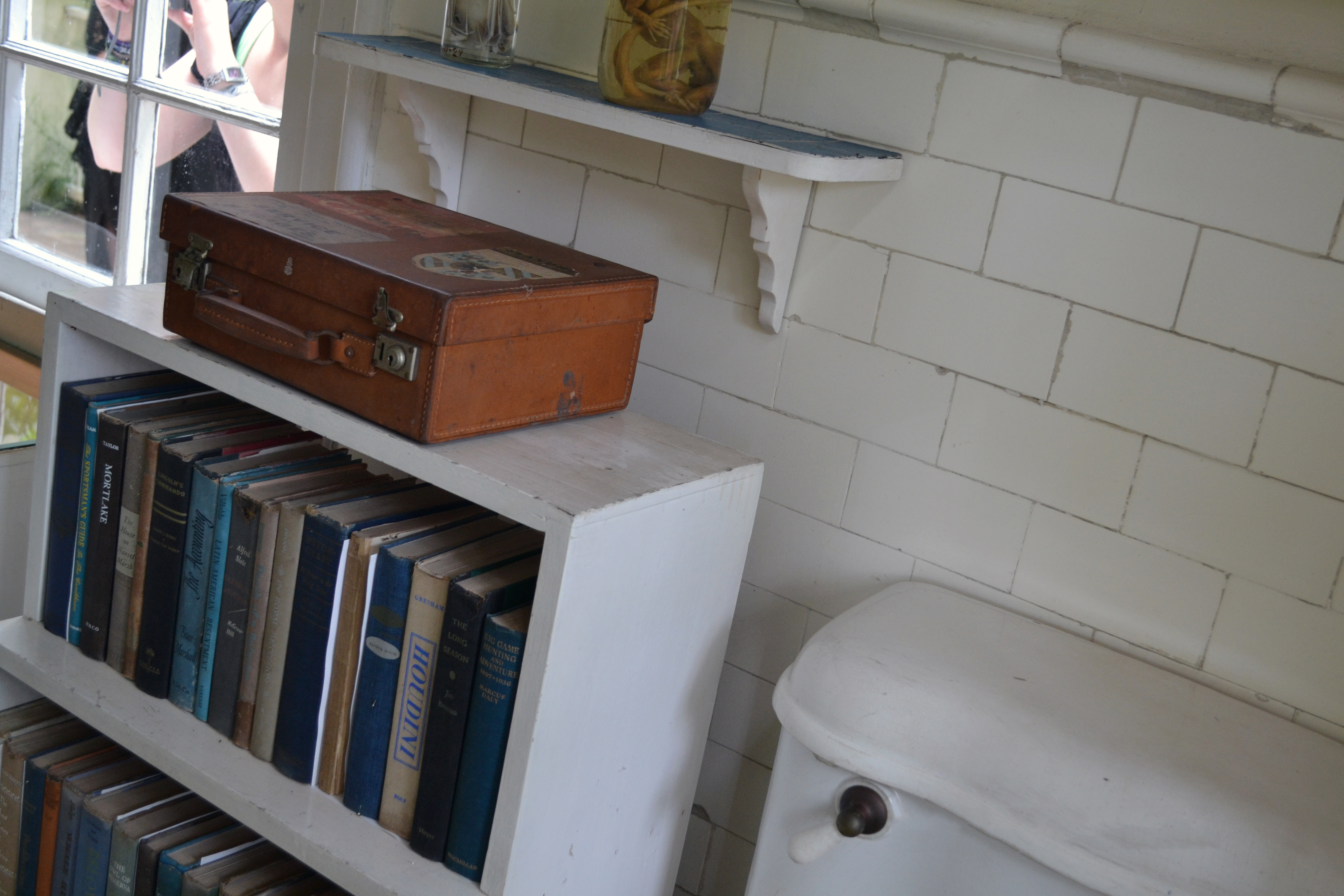
Hemingway's bathroom, Finca Vigia, Cuba

Hemingway’s bathroom, Finca Vigia, Cuba

Most all of us do it: we read while on the throne. Today that reading can be done with an iPad or the old-fashioned way, on paper.

While visiting Ernest Hemingway’s home on a legal trip to Cuba I became curious as to what the most famous American author of the 20th Century might have read while going potty.

Hemingway lived in Cuba from the 1930’s to 1960, when he left due to the Cuban Revolution of 1959.  He had a beautiful home just outside Havana called Finca Vigía or “Lookout Farm.” When Hemingway left Cuba the government took possession of his home. After his death in 1961, his widow was allowed to come back and take some personal things back with her, but the house remains as Hemingway left it, lined with books and trophies of his big game hunting days in Africa, and, of course, his reading material in the bano.

Hemingway and Cuba have quite a history together. Hemingway wrote a number of his famous novels there, including The Old Man and the Sea, which was based on a local fisherman. So intertwined with Cuba is Hemingway, that many people when visiting go to some of his favorite haunts, including his home and the El Floridita Bar, where the Daiquiri was invented.

We were on a legal trip to Cuba, whose purpose was to deliver much-needed goods to the Cuban people, such as soaps and lotions and medical supplies, but I had a chance to see what Hemingway read while pooping, so I examined the bookshelf next to the commode. You can only view it from the outside, as with all the rooms in the house, and I craned my neck to take a look at some of the volumes.  A few stood out.

One book was on the adventures of big game hunting and one other that caught my eye was a biography of Houdini.

Houdini was of course the famous escape artist of the early 20th Century, and I couldn’t help but wonder if, for all his bravado, whether Hemingway suffered from constipation and if he was reading about different escape methods that might have included ingested food.

The next time I go to Cuba, I will search out the el supremo story of what the most famous person in Cuba reads on his throne.

Fidel?

ricardo
Guest blogger Rich Davis is the Ya’lla Tours Midwest regional sales manager.
He just returned from escorting a group in Cuba. Check out his previous post written from Trinidad.

Revisiting Trinidad de Cuba

My first time in Trinidad de Cuba was in 2003.

There have been some changes since then, as the city has taken on a much more tourist friendly attitude and is reflected in the increased number of shops and restaurants.

Trinidad de Cuba, the province of , Sancti Spíritus, was founded December 23, 1514, by a rich Basque landowner from central Cuba. It has been a UNESCO World Heritage site since 1988.

The main economy is tobacco processing, but tourism is an increasing source of income for the residents of Trinidad.  In years past, Trinidad was a cultural center with theaters and music schools, and a haven for silver and goldsmiths. Today, there are, of course, the tourist shops, but also some very good street markets where you can find some authentic Cuban handicrafts, including textiles.

We visited a number of the old villas or palaces, which are now museums and then walked across the plaza to the Santísima Trinidad Cathedral, which is the largest operating church in Cuba. It is very ornate, with many side alters dedicated to various saints and the Virgin Mary.

In some free time I walked from the Iberostar, which is a 40-room, boutique hotel on a wonderful plaza, and had a quick meal at a tiny private restaurant. My meal was a large ham, egg and cheese sandwich and two Cristal beers, a local Cuba brew. My total cost: 7.50 Cuban Pesos, which is about $9 US. But it was my bar amigo who was most interesting. He told me he was a “professor.” I asked of what, and he said “tourists.” Meanwhile, the well dressed bartender (and owner, I imagine) was rolling his eyes. I think the “professor” was making a bar-to-bar study of the visitors who came to Trinidad and his podium was the bar and his lecture was to anybody who would listen. Still, he was extremely friendly, and as I left he wished me a great stay.

Back at the Iberostar, our group had decided to stay in and have a pizza party, featuring some very good pizza (thin crust). I begged a few slices and was impressed, and I am from Chicago, known for pizza.

All of Trinidad is a living museum, and it is frozen in time, because of the shifts of economy during the Industrial Revolution of the 19th Century, so everywhere you go you are walking on old cobble rock streets, passing ancient houses with red tile roofs, and listening to the music, which is everywhere.

This slideshow requires JavaScript.

Speaking of music, I have noticed now that every meal seems to come with a band. And every band come with a $10 CD. Some people like that and some don’t. I don’t mind it too much, but like home, I sometimes pay them to go away.

The one thing about Trinidad is that they do need the soaps, the lotions and the medical supplies that we bring. There is such a lack of things that we can easily buy at dollar stores or that we get from hotel stays. You just wish you could bring more, because more is always needed.

I stepped outside the Cathedral and an artist was doing pen and ink drawings of the plaza, and he asked me “when it will all end.”  He meant the United States imposed travel and trade embargo.  I shrugged. “Soon?” I said with doubt.  Fifty plus years now, so who knows.  “Yes,” said the artist, “that would be good.”  We both knew that “soon” in the political world can be decades.

If you see nothing else in Cuba, see Trinidad.  It is so beautiful and the people so friendly. You will love it.

ricardo

Guest blogger Rich Davis is the Ya’lla Tours Midwest regional sales manager.
He is currently escorting a group in Cuba. Internet connection from Cuba is spotty, so I don’t have Rich’s photos yet. I wanted to get his post up to stay as current as possible, so included some images from previous trips. We’ll do a post of Rich’s photos in the near future.

My heart is always with Cuba

Image

I didn’t know I would be having a love affair with Cuba, back in 2003,  when I first visited.  In fact, I didn’t know what to expect.  I had been to most of the Caribbean islands, but until Ya’lla Tours became a Travel Service Provider to Cuba, I had not given the island much thought. To me, it was just another rock in the sea, though a big one: Cuba is the seventh largest inhabited island in the world. Continue reading

The Best Paladares in Cuba

A paladar is a privately owned and operated restaurant in Cuba. Although they have been around since the 1990s (and illegally so before that), paladares are having a bit of a surge right now. That’s an understatement, really, they’re going gangbusters, popping up all over the place in Havana and Trinidad and even in some smaller cities, like Cienfuegos. Since new economic reforms introduced in late 2010, the paladares have a lot more freedom around what they can serve and the number of diners they can seat. Continue reading

The Cuban Economic Embargo: Unfair & Unbalanced

cuban-trade

We’re ready for the US trade embargo against Cuba to be over. The policy has had more than 50 years to achieve its goal of democratization in Cuba and it has failed. With the advent of normalized trade relations with China in 2000, the moral argument for the Cuban embargo lost all credibility. (Not that there aren’t many other examples of moral inconsistency in US trade policy, but China and Cuba are easily compared.) Continue reading