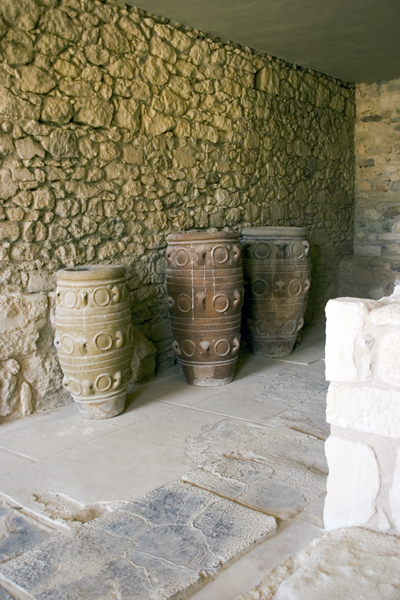
Minoan storage jars, Knossos Palace, Crete
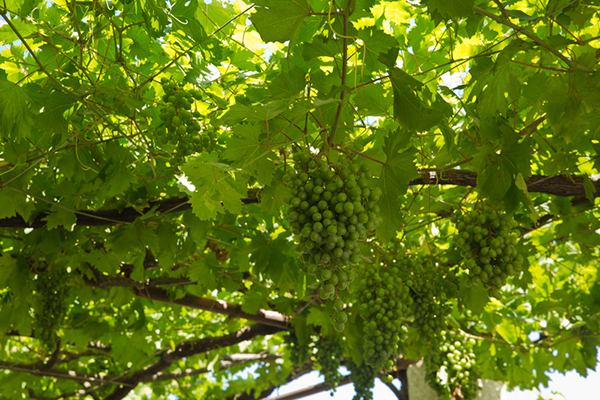
a vineyard on Crete

Matala Beach, Crete

Erechtheum Temple, Athens Acropolis

Temple of Athena Nike, Athens Acropolis

Minoan storage jars, Knossos Palace, Crete
a vineyard on Crete
Matala Beach, Crete
Erechtheum Temple, Athens Acropolis
Temple of Athena Nike, Athens Acropolis

Büyükada Island is the largest of a chain of small islands known as the Princes Islands in the Marmara Sea, about an hour by ferry from the country’s largest city, once known as Constantinople. In the 19th century wealthy Ottomans built summer houses here and many of those distinctive wooden mansions are part of the island’s appeal to tourists today. Motorized vehicles are prohibited on the island, which adds to its slow-paced, old-world atmosphere.
Can you name that county?
See below for answers.

Sharqiya Sands, also known as Wahiba Sands after the local Bani Wahiba tribe, is roughly 4,000 square miles of sandy dunes in the north-east of our mystery country, about a two-hour drive from the national capital of Muscat. Along with several indigenous Bedouin groups inhabiting this desert, the high moisture content of the sand supports a surprising variety of flora and fauna. Heavy fog regularly rolls in off the sea and is absorbed by the sands.
There are lodges and tent camps in the Sharqiya Sands, but tourism, which has taken off across the country in recent years, may soon be limited to designated areas in order to preserve the unique and sensitive ecosystem.
Can you name that country?
See below for answers.

the mellah, the Jewish neighborhood of Fez
Jews have lived in Morocco for thousands of years, at least since the 6th-century BCE, after the Babylonian Exile of the Jews from Israel. In the 1st century, after Jerusalem was destroyed by the Romans in 70CE, many Jews fled to Morocco. Their numbers increased significantly after the Jews were expelled from Spain in 1492, as part of the Spanish Inquisition.


Kuzguncuk is a neighborhood in Istanbul on the Asian side of the Bosphorus at the eastern foot of the 1st Bosphorus bridge. It’s directly across the from Ortakoy on the European side and adjacent to Beylerbeyi, home of the Beylerbeyi Palace.
The neighborhood ambles down a leafy valley opening onto the Bosphorus Straight, which separates Istanbul into European and Asian sides. With cobbled streets, Ottoman houses, and small family owned and operated shops lining the lanes, the atmosphere recalls 19th century Istanbul. An active neighborhood association works to restore and maintain the traditional character of Kuzguncuk, threatened by more profit-oriented urban development.

Historically Kuzguncuk has been peacefully multicultural, with Jews, Christian Armenians and Greeks, and Muslim Turks living and worshipping side by side for centuries. On the Bosphorus shore, a synagogue, church and mosque make friendly neighbors.
Jews expelled from the Iberian Peninsula in the 15th century settled here and put down roots, but since the establishment of the State of Israel in the mid-20th century, that population has decreased significantly. Two 19th-century synagogues still stand in the neighborhood and there’s a Jewish cemetery, with graves dating to the 15th century.
Istanbul’s oldest Armenian church is here and two Greek Orthodox churches, one of which, Hagios Panteleimon, was first established in the 6th century.
Locally, Kuzguncuk is known for fish restaurants, Bosphorus views and the laid-back charm of simpler days. İcadiye Avenue is the neighborhood’s main street, with galleries, every-day shops, cafes and a community garden. Spend a few hours just wandering. Mingle with friendly shop keepers. Linger over a meal, quite likely organic and grown in a nearby garden.
Beylerbeyi Palace in the next neighborhood makes a good companion to a Kuzguncuk visit.

Ancient Gadara was a Decapolis city, one of ten Greco-Roman city-states on the eastern fringes of the Roman Empire. Matthew 8:28-34 in the New Testament tells that Jesus cast demons from two men into a heard of pigs at Gadara, sending them running down the hill and into the Sea of Galilee. Today the Sea of Galilee is just across a national border from Gadara.
Can you name that country?
See below for answers.

Royal Palace, Fez

Royal Palace, Fez

Fez medina

Dades Valley

Draa Valley
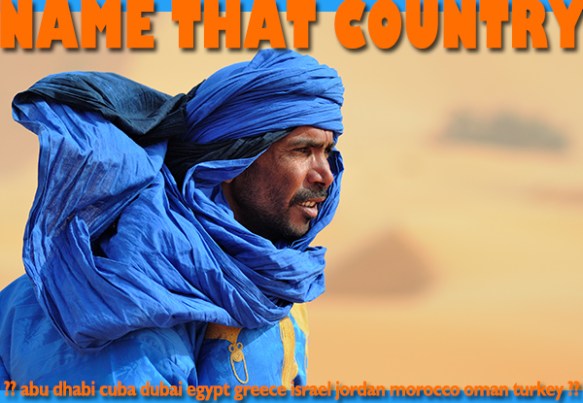 The blue men of the Sahara get their name from the blue robes and scarves that they traditionally wear. They are Tuareg, an ethnic group of the native Amazigh or Berber. About 2 million Tuareg live in the Sahara region today. The largest populations are in Niger and Mali, with a relatively small number in our mystery country.
The Tuareg are traditionally semi-nomadic traders, moving goods across the Sahara Desert to Mediterranean and Atlantic ports. They also carried enslaved people from West Africa to coastal markets and kept slaves themselves well into the 20th century. Slavery is still practiced in some communities.
Tuareg society is matrilineal and women generally have more autonomy and power relative to other Arab communities. Traditionally, Tuareg men veil their faces and women do not.
In the Christian calendar January 6 is Epiphany or Theophany, which means the manifestation of God. The day celebrates the revelation of Jesus as the son of God when he was baptized in the Jordan river by John the Baptist and/or when he was visited by the three wise men, at which time he was revealed to the gentile world.
A few Orthodox churches adhere to the ancient Julian Calendar, which is 13 days behind the Gregorian Calendar, making Julian January 6 = Gregorian January 19. Likewise, Julian December 25 is Gregorian January 7, and that is why some Christians seem to be celebrating Christmas on January 7; really, they are celebrating on December 25 but in a different calendar.

Bethany Beyond the Jordan, widely believed to be the site of Jesus’ baptism, celebrated on the feast of Epiphany, January 6

frankincense – one of the gifts brought by the wise men from the east, an event celebrated on the feast day of Epiphany, January 6
This brings me to the 12 days of Christmas. As a secular American, mostly familiar with 2 days of Christmas, if you count Christmas Eve (not to mention the 50+ days of commercial-Christmas inundation), I was always vaguely baffled by the 12 Days of Christmas song. I guess I half-consciously assumed it was an old and/or foreign custom and left it at that. Maybe some of you can relate and will appreciate a bit of clarification on the subject; maybe this is all common knowledge that was passed out while I was daydreaming about the piles of loot Santa was going to leave under our tree.
It turns out my dismissal of the 12 days as old or foreign is pretty much correct. For the record, I find old and foreign customs very interesting, unless associated with an annoying and endless song. To this day, the 12 days of Christmas are acknowledged by Christians around the world, outside the United States of America. Generations ago, in the U.S., the rhythms of commercial Christmas swallowed those of liturgical Christmas and now we count the shopping days before Christmas Day rather than the holy days after.
The 12 days of Christmas, also known as Christmastide = December 25-January 5. January 5 is 12th Night, the bridge from Christmastide to Epiphany and the festival season, which lasts through Mardi Gras. As far as I can tell, there’s no particular significance to each of the 12 days, rather it’s a prolonged celebration of the birth of Jesus. In some traditions, gifts are exchanged on each of the 12 days.
In Greece, gifts are typically exchanged on January 1st, St. Basil’s Day, rather than on December 25th. There’s not much of a tradition of Christmas trees in Greece but it’s common to keep a sprig of basil wrapped around a small cross hanging over a bowl of water. During the 12 days, the basil-cross is dunked and water is sprinkled throughout the house to ward off the dark elements of the season.
In Greece, during the 12 days of Christmas, the country is plagued with little demons called kallikatzaroi. They hide in dark crevices during the day but come out at night and subject the land to rampant mischief. Yule logs are kept burning day and night to prevent them from coming down the chimney or old shoes are burned as a smelly repellant.


With the traditional blessing of the waters on Epiphany, the kallikatzaroi are sent back underground, where they spend their time sawing at the world tree in order to topple the earth. While they are wreaking havoc for 12 days on the surface, the world tree heals and they must start sawing anew on January 6th. Essentially, the Greeks endure chaos for 12 days in order to save the world. (Thanks, most grateful!) Conversely, the kallikatzaroi sacrifice the fruits of 353 days of hard labor for 12 days of utter abandon, the mother of all frat parties.
The kallikatzaroi may be cultural remnants of the Dionysian rites of antiquity, when possessed and intoxicated devotees of the god of the vine ran around behaving in extremely uncivilized ways.
Happy Epiphany to all who celebrate and congratulations to Greece (and the world!) for surviving another year despite the best efforts of the kallikatzaroi.

