NAME THAT COUNTRY

This national museum houses objects from 5,000 years of local history. Artefacts from prehistory, Old Kingdom, Middle Kingdom, New Kingdom periods, Intermediate periods, and the Greco-Roman period. On display are enormous statues and opulent burial items of ancient kings such as the Amenhoteps (including the heretic Akhenaten), the Ramesses and the Setis; objects found at the ancient capitals of Memphis and Thebes and much, much more!


Can you name that country? 
See below for answers.

Continue reading →

Istanbul Highlights #1

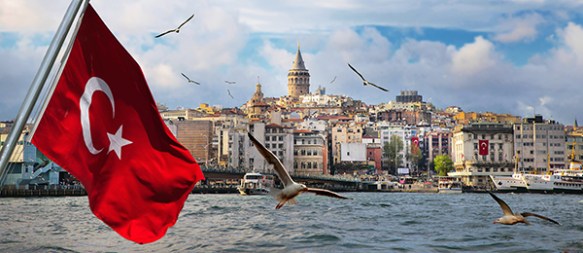
view-from-bosphorus-dreamstime

The highlights of Istanbul for a first-time visitor are:

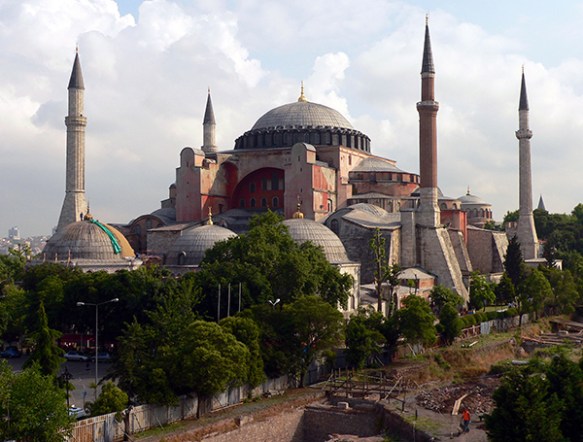
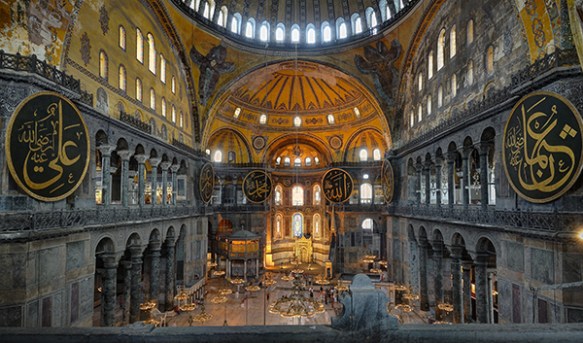
The Hagia Sophia is a 6th-century Christian basilica, converted to a mosque by the Ottomans. After 85 years as a museum, Hagia Sophia became a working mosque again in 2020. If the word awesome still had meaning, I would use it to describe the Hagia Sophia, temple of Holy Wisdom. It set the standard for Byzantine architecture, though it was 1,000 years before another cathedral surpassed its size. From the outside, it’s a red-orange mountain that seems to anchor the city to the Bosphorus shore. It’s not particularly beautiful but the air of greatness can’t be missed. On the inside, it’s vast and filled with the light of heaven. The massive, superlative dome practically floats above the wide-open enormity below. Interior surfaces are decorated with frescos, mosaics, calligraphy and marble.

Hagia_Sophia_Cathedral

hagia-sophia-interior

Continue reading →

NAME THAT COUNTRY

Pyrgi is a medieval village on the island of Chios. It’s often called the Painted Village after the unique geometric designs, xystra, covering many buildings. This type of decoration is found nowhere else in the country. It may be of Italian origin, a cultural remnant of Genoese control of the island from the 14th to 16th centuries. Pyrgi is a fortified village, with narrow lanes and buildings connected to form impassable walls.

Can you name that country? 
See below for answers.

Continue reading →

Naxos

Naxos is the largest of Greece’s Cyclades Islands. It’s an extremely fertile place, which is rare in a Greek island. Rugged mountains give way to green valleys in the interior. You can visit a different heavenly sandy beach every day for weeks! Restaurants serve the abundant locally sourced food – fresh produce, wine and cheese and olive oil and the famous Naxos potatoes.

Chora, Naxos, Greece

Chora, Naxos, Greece

Portara, Naxos, Greece

Portara, Naxos, Greece

Causeway, Naxos, Greece

Causeway, Naxos, Greece

Kastro, Chora, Naxos, Greece

Kastro, Chora, Naxos, Greece

CHORA

The main town is Chora, commonly called Naxos town, on the west coast. A string of sandy, white beaches stretches south from Chora.

The most iconic site in Chora is the Portara, an ancient portal that stands alone on the tiny island of Palatia like a doorway to an invisible realm. It’s a remnant of an unfinished temple of Apollo. A pedestrian causeway connects Naxos to Palatia and it’s a lovely spot from which to take in views of the whitewashed town across the water.

The Kastro is the Venetian castle that overlooks the town. Spend an afternoon lost in the narrow cobbled streets of the Medieval old town that wraps around the Kastro, full of charming old houses, shops and restaurants.

VILLAGES

Halki lies in the midst of ancient, but still very productive, olive groves in the center of the island. It was once the capital of Naxos and the main market town. An air of prestige still hangs over the place, with a wealth of lovely Neoclassical houses, Venetian towers and Byzantine churches. Don’t miss the impressive Panagia Church, the island’s oldest church and home to some nice frescos.

Moni
If you like old churches and frescos, you hit the jackpot on Naxos. Near the village of Moni, about 2.5km from Halki, you’ll find one of the oldest churches in Greece, Panagia Drosiani, with good frescos, some dating to the 7th century.

Panagia Drosiani, Naxos, Greece

Panagia Drosiani, Naxos, Greece

Panagia Drosiani, Naxos, Greece

Panagia Drosiani, Naxos, Greece

Sangri is about 12km southeast of Chora. This is another charming interior village but especially notable for windmills, an abundance of Byzantine churches and its close proximity to the Temple of Demeter, about 1.5km south of town. Also nearby is the 17th-century Monastery known as Bazeos Tower, about 2km to the east, which has been beautifully restored by the Bazeos family and now hosts cultural events throughout the summer.

Temple of Demeter, Naxos, Greece

Temple of Demeter, Naxos, Greece

Apeiranthos is about a 30 minute drive from Chora in the foothills of Mt. Zas (Zeus). It’s a sweet traditional village, known as the Marble Village because of the abundant use of marble in the streets and buildings. The lovely Panagia Apeiranthos, is one of the oldest churches on Naxos and houses some fine frescos. Wander aimlessly and enjoy the beautiful views, laid-back atmosphere and quirky local, Venetian-influenced architecture. Get a dose of culture at one (or all!) of the four small museums in Apeiranthos.

Apeiranthos, Naxos, Greece

Apeiranthos, Naxos, Greece

MT. ZAS

At 1004m high, Mt. Zas is the highest peak in the Cyclades. According to legend, the god Zeus spent his childhood in a cave on this mountain hiding from his father Cronus, who intended to swallow him. Zas Cave can be reached by a 10 minute drive or a 30-40 minute hike from the village of Filoti. A roundtrip hike to the summit takes 3-5 hours. It’s not an easy hike and best tackled early in the day, before it’s too hot.
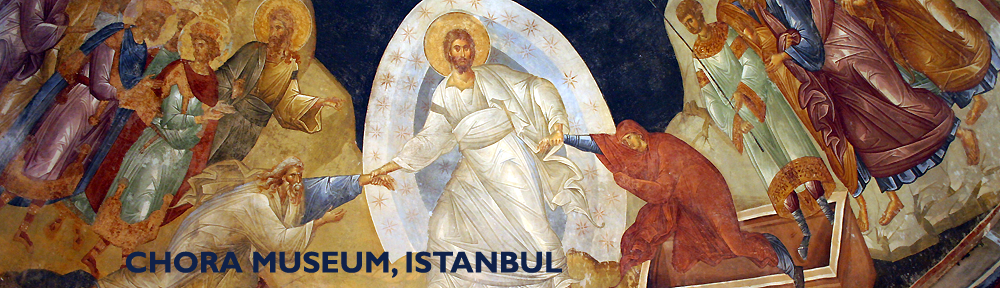
NAME THAT COUNTRY

This gorgeous tile work is inside the Topkapi Palace, the residence and governing hub of the Ottoman Empire from the middle 15th century until the Empire’s demise in the early 19th century. The palace sprawls along the waterfront of a peninsula in the heart of the city once known as Constantinople.1924, Topkapi Palace became a museum open to the public and is among the most visited sites in our mystery country.

.

Can you name that country? 
See below for answers.

Continue reading →

The National Museum of Oman

the National Museum of Oman, Muscat

the National Museum of Oman, Muscat

The National Museum of Oman is a gleaming facility showcasing the culture and history of Oman. Some 5,000 artefacts, covering 2,000,000 years of human inhabitance are beautifully displayed in 14 airy galleries and labeled in Arabic and English (and Arabic Brail!) A clean, elegant design, both inside and out, spacious rooms and a soft palette create a very soothing atmosphere for a few hours submerged in the fullness of Oman. State-of-the-art Interactive displays, and video enhance the experience. It’s one of very few museums with “open storage,” which allows visitors access to items not currently on display. Conservation and restoration facilities are on-site, as well as a learning center open to kids of all ages.

The museum is centrally located in Muscat facing the Al-Alam Palace and adjacent to the Jalali and Mirani forts and the old city wall.

NAME THAT COUNTRY

The lovely blue dome and minaret pictured belong to the Al Lawati Mosque in Muscat, the capital city of our mystery country. The mosque is a landmark in the Mutrah district of the city along the waterfront promenade or corniche. The Hajar Mountains provide a dramatic backdrop.


Can you name that country? 
See below for answers.

Continue reading →