Hot air balloons over Cappadocia with my friend (and former Ya’lla teammate) Nora Rothstein –


Nora in the sky with mittens


Here are a few more Cuba photos from our friend Jason Hedrick.


Lemons have taken up residence in my house. Suddenly, without forethought, they are on every shopping list. We are never lemonless for a full 24 hours. The other day, I surprised everyone by making a lemon cake, from scratch. It was easy (beautiful and delicious too, if I do say so…) but not something anyone, including myself, expects me to do. It’s the lemons, I tell ya. By some unconscious will, that seems to have my best interests at heart, they have become a fixture. This began about six months ago, but, just recently, I was struck with the desire to get to know lemons better. If they’re going to give themselves up for me, the least I can do is try to understand them.
Before making a concerted study, I knew, or thought I knew, that lemon is good for detoxifying, inside and out. I drink lemon juice squeezed in water all day long every day. I scrub my kitchen sink with the cut side of 1/2 a lemon, kosher salt and baking soda. My insides feel tingly fresh and my sink looks and smells the same.
Now, having read up on the subject, I know that one lemon contains about 1/2 the recommended daily dose of vitamin C, probably its strongest quality for health purposes. Other desirable and effective lemon elements include – citric acid, pectin, potassium, biflavonoids, limonene, calcium and magnesium.
You know I’m not a doctor, right? Nor am I a nutritionist. However, based on a critical survey of internet search results, I feel confident that regular and frequent lemon consumption can’t hurt and may very well help in the following categories:
Immune System
Vitamin C is one of the best antioxidants out there, acting as a defensive wall against the free radicals that would do us harm.
pH
Once metabolized, lemon has an alkalizing effect in the body, helping to maintain a healthy pH. Healthy pH is important for resisting disease, eliminating toxins, and discouraging the growth of bad bacteria.
Anti-inflammation
Chronic inflammation is bad, very bad. Lemons help reduce inflammation in joints and throughout the body.
Digestion
Lemon flushes the digestive track, promoting healthy, efficient digestion and elimination.
Internal cleansing
Lemon stimulates liver and kidney function, which detoxify the blood and whole body.
Heart health
Biflavanoids, together with potassium and vitamin C promote healthy blood pressure and circulation.
Mental health
Lemon scent reduces stress and promotes concentration and happy thoughts.
In case you’re wondering how any of this is relevant to the general theme of this blog, I’ll mention that lemon is everywhere in Middle Eastern and North African cooking. You can’t look at many such recipes without encountering preserved lemons. Much like the writer of the article linked below, I have always skipped over recipes that include preserved lemon. However, now that I am in conscious embrace with the lemon, I have a jar of them preserving in my kitchen. In a month or so, when they are ready, perhaps I’ll share a preserved-lemon-containing recipe on the blog.
In the meantime, check out this article, which includes instructions for preserving lemons and several recipes.
And here’s the recipe for the lemon cake I mentioned at the top. I made it in a bundt pan rather than the 2 loaf pans called for and it was perfect.
Na Nach is a subgroup of Hasidic Judaism that follows the teaching of the 18th-century (1772-1810) Ukrainian Rebbe Nachman of Breslov, as interpreted by the 20th century Rabbi Yisroel Bar Odesser, who received a miraculous letter from Nachman in 1922, over a century after his (Nachman’s) death.
Breslov Hasidism, among other things, encourages simple, joyful living, with lots of singing and dancing and direct, informal relationship to God. The letter Rabbi Odesser received from Nachman included a line that read Na Nach Nachma Nachman Meuman. The phrase is a kind of mantra based on Nachman’s name and it became the basis of Odesser’s worship and that of his followers, who enter an ecstatic state while chanting the phrase.
Na Nachs are out and about in Israeli cities dancing and singing in the streets spreading the joy. They may seem nutty, and many Israelis find them so, but I say, bring on the joy.
If you’re lucky enough to encounter some Na Nachs, you’ll know them by their large, betasseled yarmulkes, which are embroidered with the holy phrase. You’ll also know them because they are dancing and singing with wild abandon in the streets. They often drive a van around with music blaring, stopping periodically to dance around it.
Here’s a video of Israeli recording artist Itzik Dadya singing in the streets of Tel Aviv with a group of Na Nachs:
Is Cuba “gay-friendly?”
That is a question that has been asked of many destinations, and certainly of some Caribbean island destinations in recent years, and the good news is that Cuba is gay-friendly, to a fairly high degree.
According to Ronen Paldi, President of Ya’lla Tours USA, “Today, with Raul being in the closet and his daughter heading the ‘Gay Coalition’ (she is out of the closet), Cuba is gay friendly.” Ya’lla Tours has been a US Treasury Licensed Travel Service Provider to Cuba since 2002, and has sent thousands of people to Cuba.
How are gay visitors and natives treated in Cuba? Paldi goes on to say that gay visitors experience the same Cuba as everybody else. Cuba is a huge attraction for those who are interested in religion, culture, arts and social interaction with the Cuban people. Cubans who are gay are not persecuted like they were under Fidel’s power, according to Paldi.
Further, Cuba does have a gay social scene. “There are clubs that gay people feel more comfortable going to, and we recommend those clubs as a matter of course,” said Paldi.
While same-sex relationships might not be celebrated in Cuba (public displays of affection are not encouraged), they are fairly well tolerated, and people are free to be themselves.
Paldi reminds potential visitors to Cuba that travel to Cuba is restricted, and US Citizens and foreign nationals living in the United States, must comply with the law in any travel to Cuba.

Rich Davis, Ya’lla Tours USA Sales Manager, Midwest Region
Guest blogger Rich Davis is the Ya’lla Tours USA sales manager in the Midwest region. He’s based in Chicago.
In the Christian world, today is Good Friday, marking the day Jesus was crucified. In Jerusalem, the Via Dolorosa (Way of Sorrow), also known as the Way of the Cross, is traditionally held to be the route Jesus walked from his judgement to his death and entombment. The Via Dolorosa winds through the Old City from the Church of the Flagellation to the Church of the Holy Sepulchre. Fourteen stations mark particular moments along the way, based on biblical and other traditions. The images below include some of the stations and other sites on the Via Dolorosa.

Via Dolorosa, Jerusalem

Church of the Flagellation, center altar window showing Jesus being scourged and crowned with thorns

Church of the Flagellation, the window on the right side of the altar, showing the convict Barabbas being released instead of Jesus, according to the demands of the crowd

Church of the Flagellation, Jerusalem, the left altar window showing Pilate washing his hands of responsibility for the death of Jesus

The arch outside the Ecce Hommo Church (Behold the Man!), where Pilate presented the bound and bloodied Jesus to the crowd

Via Dolorosa, Jerusalem

According to tradition, Jesus stumbled three times as he carried the cross. The Third Station of the Cross marks the first fall.

The Fourth Station of the Cross marks where Jesus encountered his mother Mary.

shop on the Via Dolorosa, Jerusalem

vegetable vendor on the Via Dolorosa

the Sixth Station of the Cross, where tradition holds a woman named Veronica wiped the face of Jesus as he passed

daily life on the Via Dolorosa

the Via Dolorosa ends at the Holy Sepulchre Church, where Jesus was crucified, buried and resurrected, according to some traditions

inside the Holy Sepulchre Church, Jerusalem

the tomb of Jesus in the Holy Sepulchre Church, Jerusalem
Thanks to Sallie Volotzky for many of these images.
 I recently came across a pile of prints from a trip to Morocco in 2001. Most are not very good quality and after scanning, they’re even worse. Good excuse to go to town with Photoshop. Woohoo!
Happy Friday

Rabat, Morocco

Todra Gorge, Morocco

Kasbah Taourirt, Ouarzazate, Morocco

somewhere in Morocco…

Hassan II Mosque, Casablanca, Morocco

Koutoubia Minaret, Marrakech, Morocco

Hassan II Mosque, Casablanca, Morocco

Hassan II Mosque, Casablanca, Morocco

Fez Medina, Morocco

Ait Ben Haddou, Ouarzazate, Morocco

village in the Atlas Mountains, Morocco
See tours to Morocco here.
See more pictures of Morocco here.
Read posts about Morocco here and here and here.

Temple of Octavia, Corinth, Greece
The ancient site of Corinth is about an hour drive west of Athens on the isthmus that connects mainland Greece to the Peloponnese. There has been significant development there since the 8th century BCE. With ports on the Corinthian Gulf and the Saronic Gulf, Corinth controlled a great deal of trade and was very wealthy and powerful, especially in the Classical period, when the city was known for decadence. The flamboyant Corinthian Order (column) originated in Corinth and is a good reflection of the city’s character at its peak.
Ancient attempts to dig a canal through the isthmus failed but after the first try in the 7th-century BCE, a paved ramp was built so ships could be moved overland, to avoid sailing around the Peloponnese. In the late 19th century the canal was finally built, 4 miles long and only 70 feet across, too narrow for most modern seafaring traffic.
Many visitors to Corinth are interested in its biblical significance. Paul the Evangelist established a church there and visited several times. Two of his letters to the congregation in Corinth are part of the Christian Bible – 1st & 2nd Corinthians. Among the ruins are a 6th-century BCE Temple of Apollo, one of the oldest surviving Greek temples, a Roman Temple of Octavia, the Roman agora, and the Bema, a public square where Paul was judged after some of the locals complained about his preaching.

Cape Sounion, Greece
Less than an hour drive southeast of Athens is Cape Sounion, a windswept promontory jutting out into the Aegean Sea. A magnificent 5th-century BCE Temple of Poseidon commands the end of the cape. It’s a dramatic and evocative place, well worth the pretty drive from Athens along the Saronic Gulf.

Hydra island, Greece
With Saronic Islands day trips from Athens you visit three islands – Hydra, Poros and Aegina. If you’re short on time and really want to see more than one island in an organized, semi-escorted way, this is a good way to do it. On the other hand, you spend a lot more time traveling between islands and boarding and disembarking than you do on the islands. Personally, I’d rather have time to linger and soak up one place, and Hydra would be that place. Hydrofoils depart several times a day from Athens’ Pireaus port during the tourist season (March/April-October). The one-way trip takes about 1 ½ hours. The island is idyllic, with the pretty, whitewashed town tucked between amphitheater hills and the harbor, cobbled roads and no motorized traffic – the perfect recipe for lazy poking around and a long harbor-view lunch.
For your viewing pleasure, some random images of Israel.

mosaic at Tabgha, photo courtesy of IMOT

Mt. Tabor, photo courtesy of IMOT

yarmulkas, photo by Noam Chen, courtesy of IMOT

Jordan River, photo courtesy of IMOT

cranes in the Hula Valley, photo by Itamar Grinberg, courtesy of IMOT

the Garden Tomb, Jerusalem, photo by Noam Chen, courtesy of IMOT

Akko (Acre), photo courtesy of IMOT

Holy Sepulchre Church, Jerusalem, photo by Noam Chen, courtesy of IMOT

Circassians in traditional dress, photo by Itamar Grinberg, courtesy of IMOT

traditional Circassian dance & dress, photo by Itamar Grinberg, courtesy of IMOT

Circassian boy demonstrates a traditional dance move, photo by Itamar Grinberg, courtesy of IMOT

Anemones in bloom in the Galilee, photo by Itamar Grinberg, courtesy of IMOT

deer on Mount Carmel, photo by Itamar Grinberg, courtesy of IMOT

Rosh Hanikra, photo by Itamar Grinberg, courtesy of IMOT

Jezreel Valley, photo courtesy of IMOT

Church of the Primacy of Peter, Tabgh, photo by Itamar Grinberg, courtesy of IMOT
The Greece travel season of 2014 is fast upon us. Here, we offer some enticing images to mark the occasion.
ATHENS
Read about Athens here and here and here.

Evzones guards, Parliament building, Athens, Greece
DELPHI
Read about Delphi here.
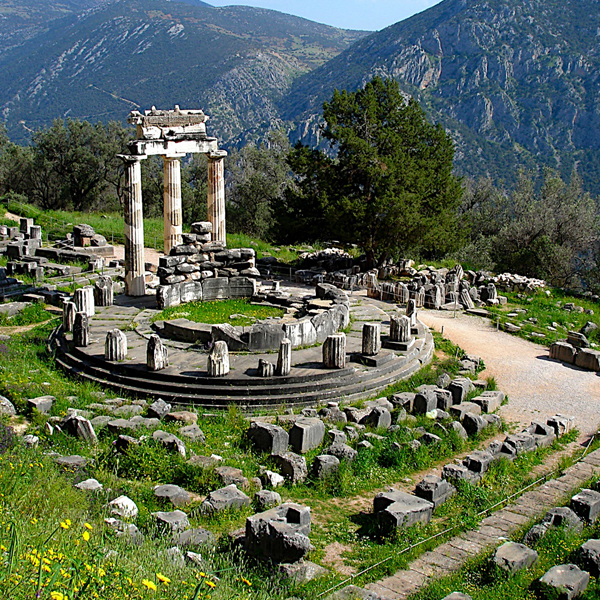
Delphi, Greece
METEORA
Read about Meteora here.
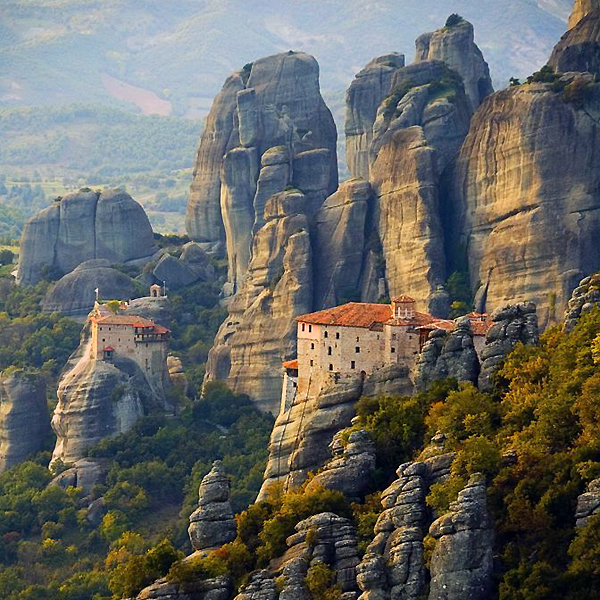
Meteora, Greece
NAPFLION
Read about Napflion here.

Nafplion, Greece
MYCENAE
Read about Mycenae here and here.
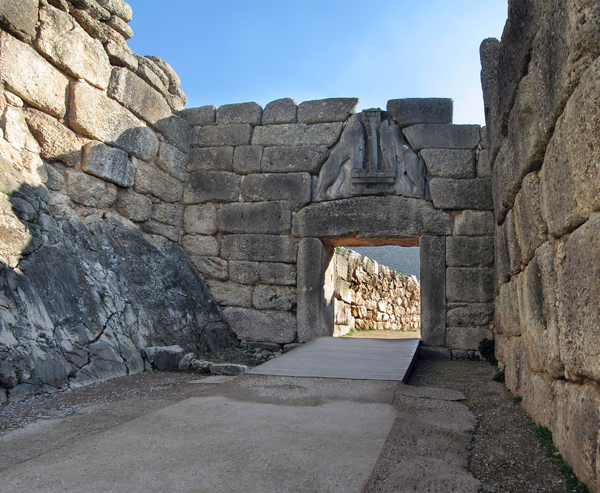
Lions Gate, Mycenae, Greece
PATMOS
Read about Patmos here.
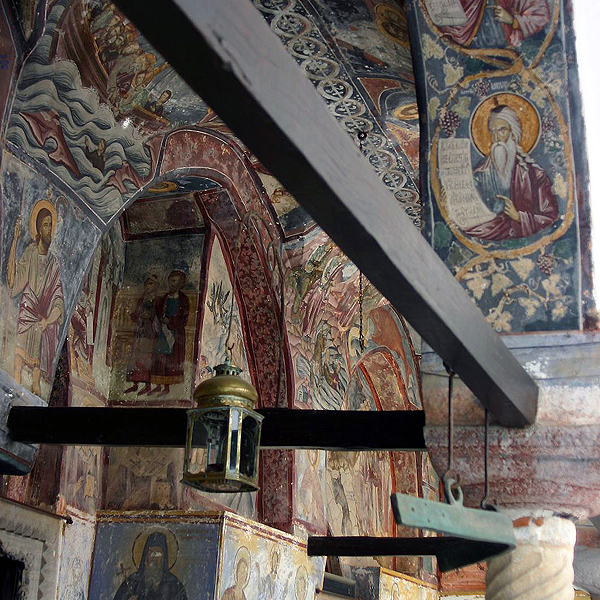
St. John Monastery, Patmos, Greece
SANTORINI
Read about Santorini here.
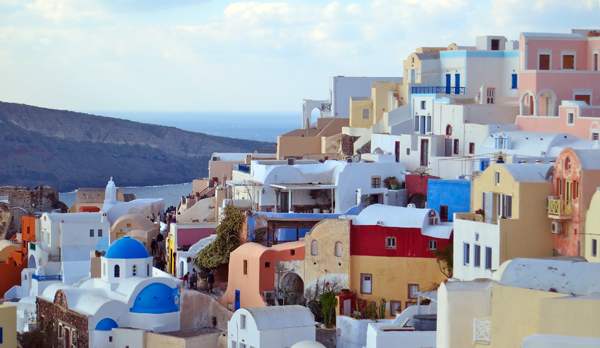
Santorini, Greece
CRETE
Read about Crete here.
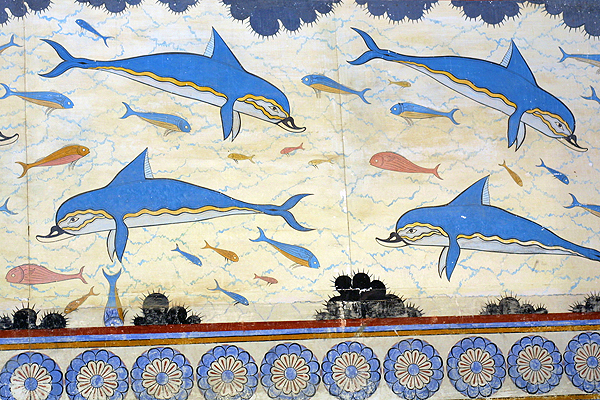
Knossos, Crete, Greece
See tours to Greece here.
 The Ya'lla Blog