NAME THAT COUNTRY

The Western Wall, built around 19BCE, is among the world’s most holy places, but much of it is hidden behind unrelated structures built up against it over the centuries. The section commonly known as the Western Wall is only about 200 feet of a total length of 1600 feet . Fifty years ago tunnel excavations began to reveal the full length of the wall, as well as the lower 17 courses below modern street level. One of many interesting things uncovered in 20 years of digging is the wall’s largest stone, which is 45 feet long, 10 feet tall and weighs 570 tons!


Can you name that country? 
See below for answers.

Continue reading

Private Touring in Israel

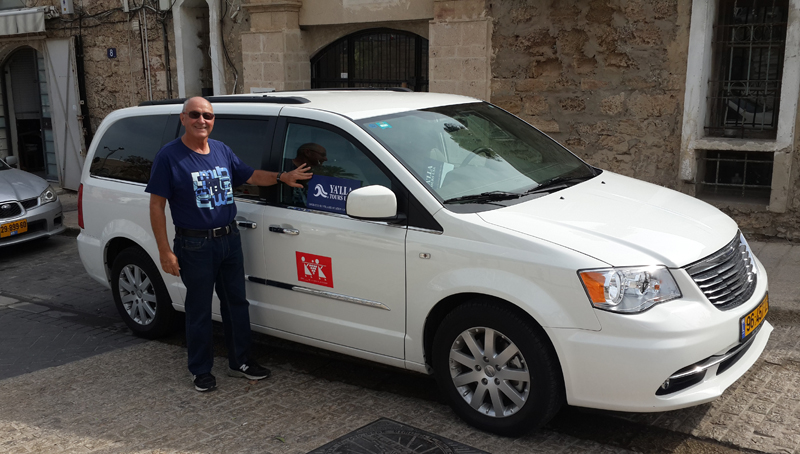
our guide Jacob modeling our touring van

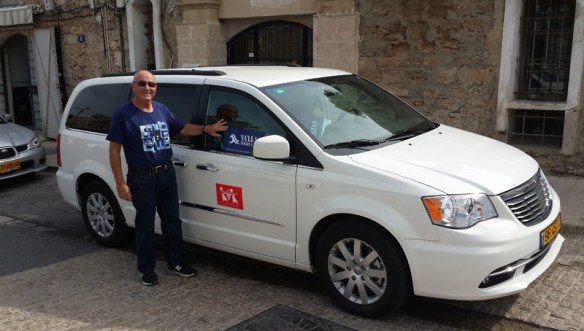
our guide Jacob modeling our touring van

The advantages of a private tour may seem obvious to some, but we get quite a few questions about the distinction between our tours labeled “private” and those labeled “motor coach.” With Ya’lla Tours, and in general, a private tour means that the travel party travels with a guide in a private vehicle. The guide and vehicle are not shared with other travelers. Scheduled motor coach tours in Israel average about 20 passengers in a bus but could have anywhere from 2 to 50 passengers.

The biggest advantage of a private tour is the lower guide to traveler ratio. With a small travel party, there’s the opportunity for much more interaction and conversation between the guide and the travelers. It really becomes like a family unit. Rather than lecturing to a crowd, the guide has the time and proximity to speak directly to and with all of her/his travelers. With large groups at site visits, it can be hard to get close enough to the guide to hear what is being said, much less have a one-on-one discussion. (Don’t get me wrong, even guides of large groups strive to connect with everyone in their flock. I’ve been in groups of over thirty, where every traveler felt personally bonded with the guide. In addition to encyclopedic knowledge about their country, good tour guides possess infinite patience, humor, kindness and energy.)

Moving from place to place is also much easier with a small party. Vans can zip through traffic and maneuver ancient, narrow streets. Despite excellent drivers, motor coaches are far less nimble; it’s just a fact. Also, stops and site visits take considerably less time with a small party, meaning you see more and experience more of the destination. Imagine 2-5 travelers arriving in a van at Capernaum, for example. From the moment they park to the moment they are all gathered around their guide at the site should take five minutes. Now imagine a motor coach group of 20 – 50. Just getting everyone off the bus takes 5 minutes or more, plus another 10-15 minutes before the entire group is standing at attention, ready to learn about the site.

Finally, with a private tour, you have much more flexibility. From the outset, your itinerary is customized to your personal interests and needs. In Israel, this is especially important because, for so many, it is a religious destination. Scheduled motor coach tours are general interest tours designed for broad appeal. While they visit religious sites, the guide’s explanations are academic rather than religious in tone.

With a private tour, you can modify your itinerary as you go to suit your experience on the ground. If you fall in love with Jerusalem’s Old City and want to spend the whole day there, you can do it. Maybe you sacrifice another visit or have a longer day tomorrow to make up what you missed today; but you have options, the private itinerary is fluid. With a motor coach tour, such changes are impossible.

Now, all of this is not to say that we are totally down on motor coach touring. We are not. It’s a good value and can be a fun social experience, meeting and touring with people from all over.

Check out tour private and motor coach tours to Israel at www.yallatours.com/israel/
NAME THAT COUNTRY

When Jesus was 30 years old, he left Nazareth and settled in the village of Capernaum, about 30 miles away. The village sits on the northern shore of the Sea of Galilee, which is actually a fresh water lake, known locally as Lake Kinneret. Several of Jesus’ disciples lived in Capernaum and fished in the lake for a living. The synagogue pictured above post-dates Jesus but is built on remains of a synagogue where he certainly preached.

Can you name that country? 
See below for answers.

Continue reading

The Dead Sea: Grab a Natural High at the Lowest Place on Earth

salty shores

the Dead Sea forms part of the border between Israel and Jordan

the Dead Sea forms part of the border between Israel and Jordan

The Dead Sea shore is 1400 feet below sea level, the lowest land spot on earth. There is no outlet for the water, which flows into the Dead Sea, technically a lake, from the Sea of Galilee (also technically a lake) via the Jordan River. Water leaves the Dead Sea only by evaporation, leaving minerals behind in high concentration. Because of the extremely low elevation, the barometric pressure is higher than anywhere else on earth, there’s a greater concentration of oxygen in the air, greater filtration of ultraviolet sun rays, and the air is practically free of pollen and other allergens.

The Dead Sea has been known for its healing properties for thousands of years, and even today, the unique climactic and mineral properties are used in therapies for conditions such as psoriasis, arthritis and cystic fibrosis.
Continue reading

Blessed Are Those

view of the Sea of Galilee from the Church of the Beatitudes, Israel, photo by Itamar Grinberg, courtesy of Israel Ministry of Tourism

view of the Sea of Galilee from the Church of the Beatitudes, Israel, photo by Itamar Grinberg, courtesy of Israel Ministry of Tourism

The Church of the Beatitudes sits on a gentle rise overlooking the Sea of Galilee on the spot traditionally believed to be where Jesus gave his Sermon on the Mount, which opens with the eight Beatitudes. This was one of the earliest sermons of Jesus and is generally believed to present the core values of Christian faith. According to the Gospel of Matthew, the Sermon on the Mount happened just after Jesus began his ministry, traveling around the Galilee region preaching and healing. He was developing a reputation as a wise teacher and miracle worker and people began to seek him out.

Now when he saw the crowds, he went up on a mountainside and sat down.
His disciples came to Him, 2and He began to teach them, saying:

3Blessed are the poor in spirit, for theirs is the kingdom of heaven.

4Blessed are those who mourn, for they will be comforted.

5Blessed are the meek, for they will inherit the earth.

6Blessed are those who hunger and thirst after righteousness,
for they will be filled.

7Blessed are the merciful, for they shall be shown mercy.

8Blessed are the pure in heart, for they will see God.

9Blessed are the peacemakers, for they will be called the sons of God.

10Blessed are those who are persecuted because of righteousness, for theirs is the kingdom of heaven.

11Blessed are you when people insult you, persecute you and falsely say all kinds of evil against you because of me. 12Rejoice and be glad, because great is your reward in heaven, for in the same way they persecuted the prophets who were before you.

Matthew 5:1-12

Foto Friday – Coptic Churches

In honor of Coptic Christmas tomorrow, January 7, 2017, a few images from Coptic churches ~

Monastery of Paul the Anchorite in Egypt's Eastern Desert

Monastery of Paul the Anchorite in Egypt’s Eastern Desert

The Archangel Michael's Coptic Church, Aswan, Egypt

The Archangel Michael’s Coptic Church, Aswan, Egypt

Basilica of the Virgin Mary, Cairo, Egypt

Basilica of the Virgin Mary, Cairo, Egypt

Coptic Chapel in the Holy Sepulchre, Jerusalem

Coptic Chapel in the Holy Sepulchre, Jerusalem

St. Samaan Church, Mokattam Mountain, Cairo

St. Samaan Church, Mokattam Mountain, Cairo

HAPPY CHRISTMAS!

NAME THAT COUNTRY Episode 129

Biblical wisdom is timeless, but it is often expressed in the activities and settings of very particular times and places. In the northern Galilee region of our mystery country, Nazareth Village provides visitors with living context for some familiar ancient stories.
Visitors observe and participate in daily chores performed in the manner of 1st-century Galilean villagers. Tending animals and crops, pressing olive oil, baking bread… The village buildings and methods of farming and household tasks are based on scholarly research and archaeological evidence.

Can you name that country? 
See below for answers.

Continue reading

Foto Friday – Merry Christmas!

Church of the Visitation, Jerusalem, photo by Noam Chen, courtesy of the Israel Ministry of Tourism

Church of the Visitation, Jerusalem, photo by Noam Chen, courtesy of the Israel Ministry of Tourism

Chora Museum, Istanbul

Chora Museum, Istanbul

Dormition Abbey, Jerusalem, photo by Noam Chen, courtesy of the Israel Ministry of Tourism

Dormition Abbey, Jerusalem, photo by Noam Chen, courtesy of the Israel Ministry of Tourism

Dormition Abbey, Jerusalem, photo by Noam Chen, courtesy of the Israel Ministry of Tourism

Dormition Abbey, Jerusalem, photo by Noam Chen, courtesy of the Israel Ministry of Tourism

Church of the Holy Sepulchre , Jerusalem, photo by Noam Chen, courtesy of the Israel Ministry of Tourism

Church of the Holy Sepulchre , Jerusalem, photo by Noam Chen, courtesy of the Israel Ministry of Tourism

Jerusalem Old City walls, photo by Dafna Tal, courtesy of the Israel Ministry of Tourism

Jerusalem Old City walls, photo by Dafna Tal, courtesy of the Israel Ministry of Tourism

the Shuk, Machane Yehuda, Jerusalem

the shuk, Jerusalem

the shuk, Jerusalem

Machane Yehuda market in central Jerusalem is a traditional Middle Eastern, open-air market or shuk founded in the late 19th century. It’s known by locals simply as the Shuk and as an enduring symbol of the city.

In the last 10 years, the market has really evolved into a hybrid of the Old World market and a center of trendy shopping, eating and entertainment. Along with produce vendors, bakeries, fish mongers, wine shops, cheese sellers etc… you find cafes, clothing boutiques, bars, live music, street art and hopping nightlife.

A wander through the Shuk, where some 200,000 diverse locals mingle each week, may be the best way to connect with living, breathing Jerusalem. Many of our private tours include a guided tour of Machne Yehuda, with emphasis on the history of the market and the more traditional foods and ingredients available there.