Foto Friday – Greece

The Greece travel season of 2014 is fast upon us. Here, we offer some enticing images to mark the occasion.

ATHENS
Read about Athens here and here and here.

Evzones guards, Parliament building, Athens, Greece

Evzones guards, Parliament building, Athens, Greece

DELPHI
Read about Delphi here.

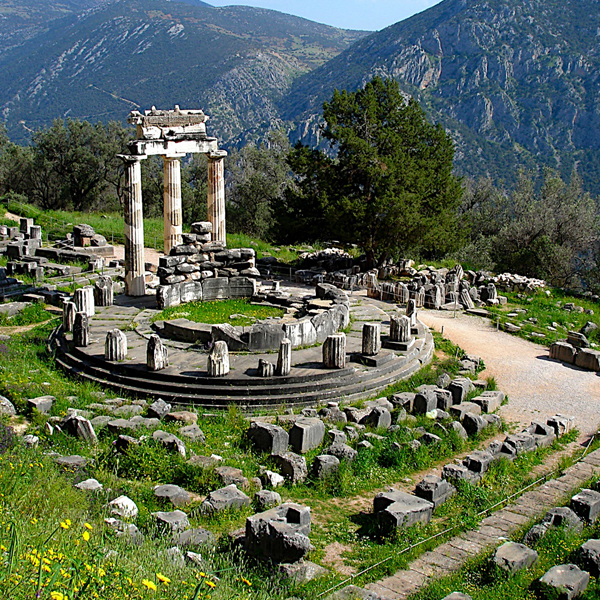
Delphi, Greece

Delphi, Greece

METEORA
Read about Meteora here.

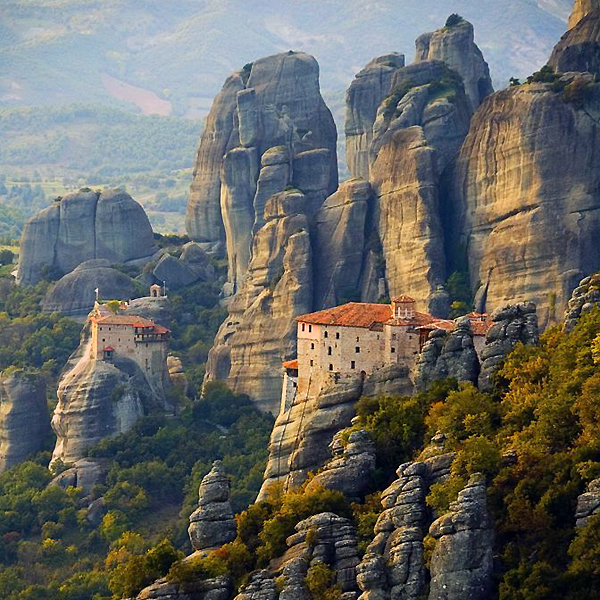
Meteora, Greece

Meteora, Greece

NAPFLION
Read about Napflion here.

Nafplion, Greece

Nafplion, Greece

MYCENAE
Read about Mycenae here and here.

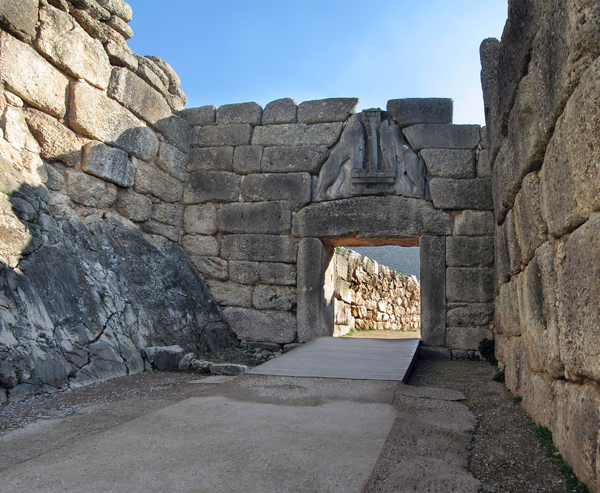
Lions Gate, Mycenae, Greece

Lions Gate, Mycenae, Greece

PATMOS
Read about Patmos here.

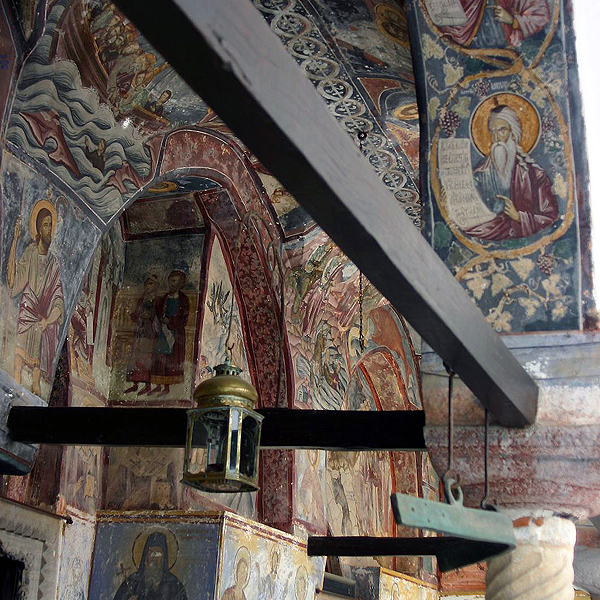
St. John Monastery, Patmos, Greece

St. John Monastery, Patmos, Greece

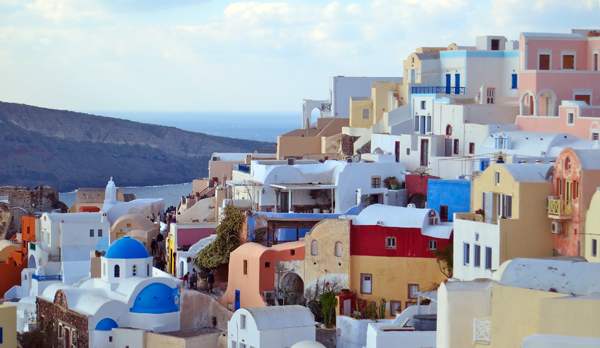
SANTORINI
Read about Santorini here.

Santorini, Greece

Santorini, Greece

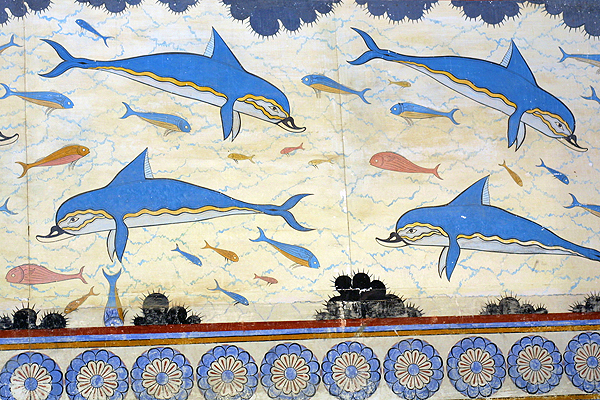
CRETE
Read about Crete here.

Knossos, Crete, Greece

Knossos, Crete, Greece

See tours to Greece here.

Patmos & Revelation

Patmos is a Greek island off the western coast of Turkey. It’s especially important for Christians as the place where the Book of Revelation was written. The author refers to himself as John and there are varying opinions as to whether he and the author of the Gospel of John (the “beloved disciple” of Jesus) were one in the same.

In any case, John of Patmos  was an exile or refugee on the island during the Christian persecutions by the Roman emperor Domitian near the end of 1st century. If he was the disciple of Jesus, he would have been in his 90s. The story goes that John took shelter from the heat of the day in a cave and there encountered Jesus in the form of an angel, who dictated a message to each of seven Christian communities in Asia Minor (western Turkey). Then John was transported to heaven and the throne of God, where he received an apocalyptic message that has deeply affected Western culture, religious and secular.

This slideshow requires JavaScript.

Whether read as prophecy or allegory, the imagery is vivid and terrifying. John is shown the radiant throne of God encircled by a rainbow and emitting thunder and lightning. Jesus stands before the throne in the form of a slaughtered lamb and he shows John the 4 Horsemen of the Apocalypse. Then John sees a sign in heaven – a pregnant woman clothed in the sun and a tremendous red dragon waiting to take her child. As soon as the child is born, he is taken to heaven and his mother escapes to the forest. The enraged dragon is thrown out of heaven to earth, where he calls upon 2 beasts to assist him in a battle against heaven. In heaven, 7 angels pour 7 bowls full of God’s wrath onto the earth to torment the faithless there. Jesus leads an army of angels against the dragon and his angels and the ungodly humans. The forces of heaven prevail and vultures devour all the ungodly dead. The dragon is thrown into Hell. All the dead rise to be judged by Jesus, who throws the evil-doers into Hell and welcomes the good to eternity in Heaven. That’s the short version. Until recently, I had never read the full text. Actually, I still haven’t read it. I listened to a mesmerizing audio recording by Max McLean.

This slideshow requires JavaScript.

Getting to Patmos is not easy. For groups, we usually charter a private boat from Kusadasi, Turkey, but that’s expensive for couples and small parties. Most Aegean cruises include a port stop at Patmos, see the cruise tours on our website. Ferries from Piraeus take 7-8 hours. It may be possible to fly from Athens to Samos and ferry to Patmos from there.

Faster, Higher, Stronger in Ancient Olympia

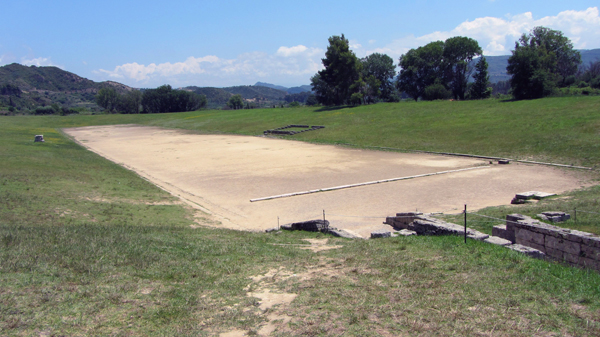
the ancient stadium at Olympia, Greece

the ancient stadium at Olympia, Greece

The Olympics are coming up very soon, in case you hadn’t heard. Profiles of athletes, scrutiny of the human rights transgressions of the Russian hosts and concerns about security have been daily media topics for several weeks now. I can hardly let the season pass without contributing something from our particular angle. So here’s a piece about the original Olympic Games and their home, Olympia, Greece.

The ancient games began in 776 BCE and went on every four years until they were banned as a pagan festival by the Christian Roman Emperor Theodosius in 393 CE.

The Olympian Games was one of four Panhellenic festivals held every two or four years, scheduled to alternate so that at least one or another happened each year. Besides the Olympian Games, there were the Pythian Games, the Nemean Games and the Ithsmian Games. They were all primarily religious festivals, with the Olympic Games dedicated to Zeus. They were also designed to promote friendly interaction between sometimes combatant city states. The main political entity of Ancient Greece was the city-state and conflict over resources was constant. More than competition, the games brought everyday rivals together to celebrate those things they had in common, namely religion and the great honor of being Greek.

Only free Greek men were allowed to compete in the games. Women could not compete and could only watch the games if they were unmarried. One source I read explained that the ban on married women was due to the nakedness of the athletes and, while I think that’s only speculative, there is logic to it. Whatever the reason for the ban, it was on penalty of death. It’s true that the athletes competed in the nude, which seems dangerous to me, and not very aerodynamic. Nevertheless, Ancient Greeks celebrated the fit male form and regularly put it on display. They generally exercised in the nude and had naked drinking parties called symposia.

Originally the games only lasted one day but over the years grew to five days, part of that time take up by religious rituals. The competitive events included running, jumping, discus throwing, javelin throwing, wrestling, boxing, horse racing and chariot racing. Winners received an olive branch and red ribbons after their event and an olive wreath crown at the closing ceremony. More prizes awaited from their home towns, where they were treated as local heroes.

The site of the ancient Olympian Games was the sanctuary of Olympia on the western Peloponnese peninsula. The setting is idyllic in a lush river valley, with rolling green hills all around. The temples of Zeus and Hera were the main religious attractions. They were accompanied by treasuries and administrative buildings. A colossal ivory and gold statue of Zeus stood in his temple and was one of the Seven Wonders of the Ancient World. The main structures for athletic events were a stadium and a hippodrome for the horse and chariot races. Today, the site consists of a lot of foundations and broken columns. The most complete remains are the partially reconstructed Temple of Hera and the Philippeion, built to honor a battle victory by Philip of Macedon (father of Alexander the Great). It’s an exceptionally lovely place, do visit if you have the chance.

Olympia is about 4 hours from Athens but is best seen on several-days tour of the Peloponnese.

Click to see tours that include Olympia on our web site.
Greek Salad, Have Some Today!

Image

It’s tomato season! That blessed time of the year when honest, sun-ripened,  fruits-of-the-gods are bending vines from Portland to Pireaus.

Typical of many cultures, other than the North American, Greeks traditionally eat their big meal in the midday, followed by a rest before heading back to work. The evening meal will be something light, salad and bread, for example. The traditional Greek salad (Horiatiki) is on every menu this time of year. It’s quick and easy to make, pretty to look at and perfectly healthy to eat. Continue reading

Athens Highlights

Changing of the Guard

The last few years have been very difficult for Greece. The economic situation is dire and ordinary Greeks struggle everyday to get by. The anxiety and uncertainty has to be crushing. From the outside, we can only guess. Even from the inside, as visitors, it’s not obvious. Recently, our illustrious leader, Ronen Paldi, visited our friends and colleagues in Greece, and he found the streets, squares and tavernas alive with Greeks. They are not, after all, staying under the covers all day lamenting their hard lot. Greek character has weathered some pretty wretched chapters in 3,000+ years, some of the worst in just the last century. They won’t be beat by this latest test. Visitors are welcomed with the same exuberance as always, only now, perhaps, appreciated more than ever. Continue reading