Unknown's avatar

About yalla2013

Ya'lla Tours USA is a boutique tour operator offering top quality travel services in 10 exciting countries: Bahrain, Cuba, Egypt, Greece, Israel, Jordan, Morocco, Oman, Turkey and the United Arab Emirates. Ya'lla Tours communications director, Kyna Perry, writes this blog based on personal experience and the deep well of experience and knowledge of Ya'lla colleagues near and far.

Happy New Year! Eat Pomegranate for a Lucky 2018

With its many seeds, the pomegranate has been associated with fertility and happy bounty in many cultures for thousands of years. The red juice sometimes represents death.

Perhaps the most famous occurrence of the pomegranate in mythology is in the story of Persephone, where the fruit symbolizes the cycle of life, death and rebirth.

Persephone was abducted by Hades, lord of the Underworld and forced to marry him. She was tricked into eating several pomegranate seeds in the Underworld, where eating anything consigned one to that place forever. At the loss of her daughter, Persephone’s mother Demeter, goddess of the harvest, went into deep mourning causing all the plants to die. Faced with the prospect of an eternal winter, Zeus was forced to negotiate terms with his brother Hades. A settlement was reached. which allowed Persephone to return to the world of the living for several months each year, bringing with her the seasons of generation and growth.

Still today, in the Mediterranean region and beyond, the pomegranate symbolizes prosperity and abundance and is often found at occasions of new beginnings.

Greeks break a pomegranate on the doorstep on New Year’s day as a blessing of good luck and abundance for the coming year. In Turkey pomegranates are eaten on New Year’s Day for good luck. Jews eat pomegranates on Rosh Hashana for the same reason.

In Turkey and other Mediterranean countries, newlyweds break a pomegranate on their doorstep before entering to symbolize their hope of fertility and prosperity in their life together.

In Jewish tradition, pomegranates are said to have 613 seeds to represent the 613 mitzvot (commandments) of the Torah. Pomegranates adorned the columns of King Solomon’s temple and the robes of the ancient priests of Israel.

In Christian symbolism, the pomegranate, broken open to expose its many seeds and red juice, represents the blood and resurrection of Jesus.

Madonna of the Pomegranate by Sandro Botticelli, 1487

Madonna of the Pomegranate by Sandro Botticelli, 1487, from Wikipedia

In some traditions, the fruit eaten by Adam in Eden is not an apple but a pomegranate and the Tree of Life is a pomegranate tree.

The pomegranate is one of the four sacred trees of Islam, along with the olive, the fig and the date. Islamic tradition tells that one seed of every pomegranate is a holy seed from Eden and has spiritually purifying effects when eaten.

The Tree of Life, Palace of Shaki Khans, Azerbaijan, from Wikipedia

The Tree of Life, Palace of Shaki Khans, Azerbaijan, from Wikipedia

NAME THAT COUNTRY

The so-called Monastery is just one of the monuments to be seen at the most visited (and most famous) attraction in our mystery country, a fabulously wealthy Nabatean trading city, which flourished from about 200 BCE to 200 CE. It’s well worth the climb to see this rock-cut temple up close, not to mention the gorgeous views.


Can you name that country? 
See below for answers.

Continue reading

NAME THAT COUNTRY

This local gentleman, helping a Ya’lla traveler scale a sand dune, wears the traditional blue robe and scarf of indigenous Saharan groups. They are commonly called “blue men” because the natural indigo dye rubs off, leaving them with permanently blue tinted skin.


Can you name that country? 
See below for answers.

Continue reading

NAME THAT COUNTRY

As the cradle and world center of the mystical Kabbalah tradition, Safed (also spelled Tsfat, Tzfat, and a number of other ways) is one of four holy cities in our mystery country. Located at and elevation of 3,000 feet in the far north of the country, the town’s sweet air, crystalline light and mountain views attract many artists as well as spiritual scholars and pilgrims.

Can you name that country? 
See below for answers.


Continue reading

Old Cairo

Everyone knows about ancient Egyptian attractions in the Cairo area – the pyramids at Giza being the most famous, by far. While there were important settlements nearby for thousands of years, the city of Cairo proper originated with the Roman Fortress of Babylon in the 3rd century. The fort was built on the banks of the Nile around a harbor and the Nile-end of a canal that connected the river with the Red Sea. This had long been a strategic area, the border of Upper and Lower Egypt, where the river begins to spread out into the delta, only a few miles north of the ancient Egyptian capital of Memphis, which dates back to 3,000 BCE, at least.

Roman walls of the Babylon Fortress in Old Cairo

Roman walls of the Babylon Fortress in Old Cairo

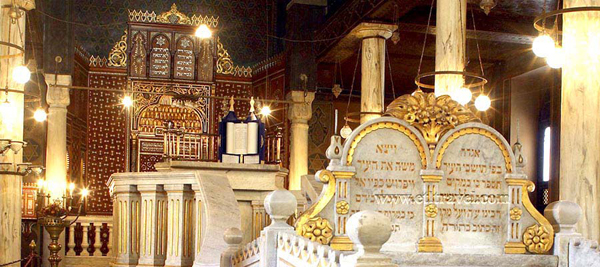
The Roman fort still stands, surrounding the area known as Old Cairo or Coptic Cairo. Coptic Christians settled within the fort very early in the Christian era and it remains a Coptic enclave still. The fort encloses numerous churches, monasteries and convents, as well as the Ben Ezra Synagogue and Amr Ibn al-As, Cairo’s oldest mosque.

The main attractions:

St. Virgin Mary’s Coptic Church/The Hanging Church (El Muallaqa) is the most famous church in Old Cairo. It’s built atop the bastions of one of the fortress gates, with the nave hanging over the passageway.

the Hanging Church, Old Cairo

the Hanging Church, Old Cairo

Saints Sergius and Bacchus Church (Abu Serga) stands on ground where, according to tradition, the Holy Family stayed on their flight away from the murderous Herod the Great.

Church of Saints Sergius and Bacchus, Old Cairo

Church of Saints Sergius and Bacchus, Old Cairo

The Greek Orthodox Church of St. George is built around a tower of one of the fortress gates. A peaceful cemetery stands within the grounds of the church.

St. George's Greek Orthodox Church, Old Cairo

St. George’s Greek Orthodox Church, Old Cairo

Originally a church, the Ben Ezra Synagogue was established in the 9th century, when Abraham Ben Ezra purchased the building from Coptic Christians who needed to raise money for taxes.

Amr Ibn al-As Mosque is Cairo’s oldest mosque. It was built in the 7th century for the commander of the first Arab army to conquer Egypt.

This quiet, atmospheric area feels worlds away from the surrounding chaos that is Cairo. It’s well worth a few hours of exploring.

Click to see Egypt tours that include visits to Old Cairo.

NAME THAT COUNTRY

Known as the Colossi of Memnon, these two statues of Amenhotep III have stood on this spot for well over 3,000 years. They were dubbed Memnon by ancient Greek tourists after their mythological hero. Memnon was the son of Eos, the goddess of dawn and it was said that sounds came from one of the statues (the one on the right in this picture) at or near dawn.The statues are 60ft tall and weigh over 700 tons, each.


Can you name that country? 
See below for answers.

Continue reading

Ch Ch Ch Ch Changes, Turn and Face the Strain – the World View of Pre-Socratic Philosopher Heraclitus

In the ancient Greek world, pre-Socratic philosopher Heraclitus was among the very first “natural philosophers,” those who sought understanding of the physical world through observation. Before these thinkers, the mechanics of nature were attributed to the actions of the gods.

Heraclitus was a citizen of Ephesus, a Greek city on the Ionian coast, today western Anatolia in Turkey. He was part of a wave of revolutionary thought that rose up out of western Anatolia in the 5th and 6th centuries BCE. Other important thinkers from that time and place include Thales, Anaximander, Anaxagoras and Anaximenes.

All that we know of Heraclitus comes down through later philosophers, including Plato and Aristotle, who referenced and quoted him extensively in their writings. Collections of his ideas are published as “Fragments,” presumably of a more complete body of work, now lost.

Heraclitus believed that the universe and everything in it is in an eternal state of becoming and that change is the only constant. His most famous and emblematic aphorism is that a person can never step into the same river twice, meaning that the person and the river will be different each time they meet.

You cannot step twice into the same rivers; for fresh waters are flowing in upon you. (12)
We step and do not step into the same rivers; we are and are not. (49a)

He understood the universe to be composed of the union of opposites striving for harmony, each reliant on the other for its existence. The interaction of united opposites  provides the primary universal order, which Heraclitus called logos and symbolized with fire. In this world, conflict is a natural and essential process to all being and exists on a continuum with reconciliation.

The way up and the way down is one and the same. (60)

In the circumference of a circle the beginning and the end are common. (103)

Men do not know how what is at variance agrees with itself. It is an attunement of opposite tension, like that of the bow and the lyre. (51)

Couples are things whole and not whole, what is drawn together and what is drawn asunder, the harmonious and discordant. The one is made up of all things, and all things issue from the one. (10)

God is day and night, winter and summer, war and peace, surfeit and hunger; but he takes various shapes, just as fire, when it is mingled with spices, is named according to the savour of each. (67)

We must know that war is common to all and strife is justice, and that all things come into being and pass away through strife. (80)

It is sickness that makes health pleasant and good; hunger, satiety; weariness, rest. (111)

Heraclitus expressed little confidence in either the perceptive powers or the intelligence of his fellow humans. While acknowledging that the truth of things was hidden, he despaired that most people were unable to comprehend the truth even when pointed out to them. He is sometimes referred to as the Weeping Philosopher, partly due to his intellectual isolation. As an arrogant misanthrope, he probably didn’t have many friends, which also may have led to some tears.

Nature loves to hide. (123)

Eyes and ears are bad witnesses to men, if they have souls that understand not their language. (107)

The many do not take heed of such things as those they meet with, nor do they mark them when they are taught, though they think they do. (17)

Fools when they do hear are like the deaf; of them, does the saying bear witness that they are absent when present. (34)

##

The fragments used in this post are all from the John Burnet translation.