In the Christian calendar January 6 is Epiphany or Theophany, which means the manifestation of God. The day celebrates the revelation of Jesus as the son of God when he was baptized in the Jordan river by John the Baptist and/or when he was visited by the three wise men, at which time he was revealed to the gentile world.
A few Orthodox churches adhere to the ancient Julian Calendar, which is 13 days behind the Gregorian Calendar, making Julian January 6 = Gregorian January 19. Likewise, Julian December 25 is Gregorian January 7, and that is why some Christians seem to be celebrating Christmas on January 7; really, they are celebrating on December 25 but in a different calendar.
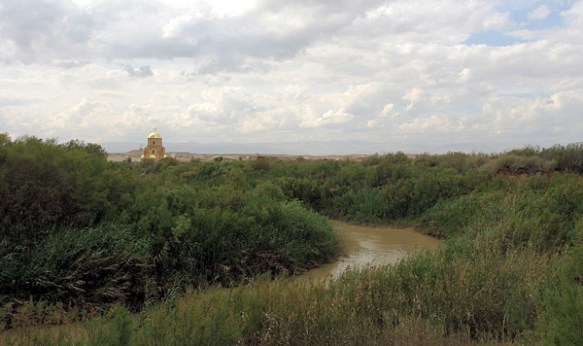
Bethany Beyond the Jordan, widely believed to be the site of Jesus’ baptism, celebrated on the feast of Epiphany, January 6
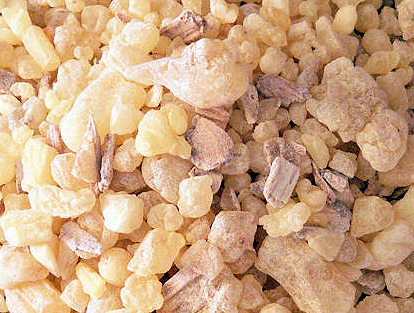
frankincense – one of the gifts brought by the wise men from the east, an event celebrated on the feast day of Epiphany, January 6
This brings me to the 12 days of Christmas. As a secular American, mostly familiar with 2 days of Christmas, if you count Christmas Eve (not to mention the 50+ days of commercial-Christmas inundation), I was always vaguely baffled by the 12 Days of Christmas song. I guess I half-consciously assumed it was an old and/or foreign custom and left it at that. Maybe some of you can relate and will appreciate a bit of clarification on the subject; maybe this is all common knowledge that was passed out while I was daydreaming about the piles of loot Santa was going to leave under our tree.
It turns out my dismissal of the 12 days as old or foreign is pretty much correct. For the record, I find old and foreign customs very interesting, unless associated with an annoying and endless song. To this day, the 12 days of Christmas are acknowledged by Christians around the world, outside the United States of America. Generations ago, in the U.S., the rhythms of commercial Christmas swallowed those of liturgical Christmas and now we count the shopping days before Christmas Day rather than the holy days after.
The 12 days of Christmas, also known as Christmastide = December 25-January 5. January 5 is 12th Night, the bridge from Christmastide to Epiphany and the festival season, which lasts through Mardi Gras. As far as I can tell, there’s no particular significance to each of the 12 days, rather it’s a prolonged celebration of the birth of Jesus. In some traditions, gifts are exchanged on each of the 12 days.
In Greece, gifts are typically exchanged on January 1st, St. Basil’s Day, rather than on December 25th. There’s not much of a tradition of Christmas trees in Greece but it’s common to keep a sprig of basil wrapped around a small cross hanging over a bowl of water. During the 12 days, the basil-cross is dunked and water is sprinkled throughout the house to ward off the dark elements of the season.
In Greece, during the 12 days of Christmas, the country is plagued with little demons called kallikatzaroi. They hide in dark crevices during the day but come out at night and subject the land to rampant mischief. Yule logs are kept burning day and night to prevent them from coming down the chimney or old shoes are burned as a smelly repellant.

kallikatzaros

kallikatzaroi sawing the world tree
With the traditional blessing of the waters on Epiphany, the kallikatzaroi are sent back underground, where they spend their time sawing at the world tree in order to topple the earth. While they are wreaking havoc for 12 days on the surface, the world tree heals and they must start sawing anew on January 6th. Essentially, the Greeks endure chaos for 12 days in order to save the world. (Thanks, most grateful!) Conversely, the kallikatzaroi sacrifice the fruits of 353 days of hard labor for 12 days of utter abandon, the mother of all frat parties.
The kallikatzaroi may be cultural remnants of the Dionysian rites of antiquity, when possessed and intoxicated devotees of the god of the vine ran around behaving in extremely uncivilized ways.
Happy Epiphany to all who celebrate and congratulations to Greece (and the world!) for surviving another year despite the best efforts of the kallikatzaroi.
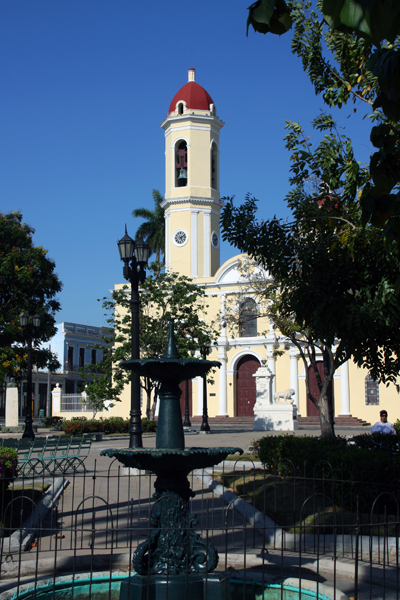
 The Paseo del Prado in Cienfuegos is the longest pedestrian promenade in the country. It stretches about 2km across the city to the malecón, the waterfront promenade. Developed by French settlers in the 19th century, Cienfuegos is much younger than the Spanish colonial cities of the country and its abundant Neoclassical architecture gives it a distinctive feel. Many of the city’s beautiful buildings can be seen along the Paseo del Prado.






 The Ya'lla Blog