5 Things To Do In Muscat, Oman

Royal Opera House of Muscat
This is a magnificent building, inside and out. If you’re able to catch a performance there, we’re thrilled for you and a bit envious. If not, we highly recommend a taking a tour. The monumental proportions, sublime design and state of the art technology are testament to the high value Sultan Qaboos places on the arts. He’s a big fan of classical music himself but he had the opera house built for the people of Oman and visitors. Besides world-class performances, the opera house offers arts education programs, lectures and workshops.

Al Alam Palace
This is the ceremonial palace of the sultan of Oman. It’s not open to the public but it’s easily accessible for photos and visual consideration from the front and back. It’s a very unique piece of architecture, especially the central building, which I found kind of obnoxious initially, to be honest. But the more I look at it, the more I love it. It was completed in 1972, which explains a lot. The modern, organic Islamic style is whimsical and flamboyant in the most friendly way. I love it even more now than I did when I started writing this paragraph.

Sultan Qaboos Grand Mosque
Another awesome building, outside it’s all cool, serene elegance, with gleaming marble surfaces and pearly arches. Inside, the exposed timber ceilings are warm and earthy, while heavenly multitudes seem to open out to infinity in the massive central dome. Modestly dressed non-Muslims are welcome.

Stroll the Corniche
The Muttrah Corniche pedestrian promenade rambles for about 3km along the sea wall in the Muttrah district of Muscat. If you avoid the midday heat, it’s bustling with locals and visitors and is the perfect vantage from which to take in harbor sights on one side and the pretty sea-front avenue backed by the craggy Hajar mountains and old Portuguese watch towers on the other side. From the corniche you can access the fish market, best in the early morning, and the adjacent fruit and vegetable market and down the way is the Muttrah Souk. You’ll find benches, a park and fountains along the corniche.
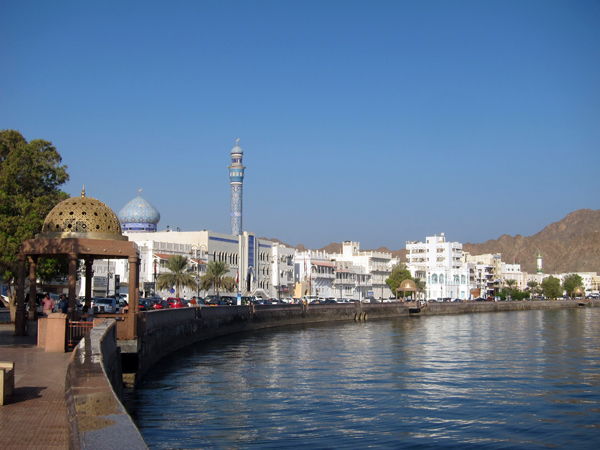
Muttrah Corniche, Old Muscat, Oman

Muttrah Corniche, Old Muscat, Oman

Muttrah Souk
This, the oldest market in Oman, is a must, whether or not you’re a shopper. The streets closest to the corniche are pretty touristy but if you persevere into the maze you’ll find a feast of authentic shops. Some good buys are gold, silver and frankincense. Be sure to bargain. The souk closes from about 1-5pm each day and it especially bustles with locals in the evenings.

Read more about Oman here.
See more pictures of Oman here and here.
See our tours to Oman here.

Foto Friday – Oman

Sultan Qaboos Grand Mosque, Muscat, Oman, photo by Sallie Volotzky

Sultan Qaboos Grand Mosque, Muscat, Oman, photo by Sallie Volotzky

Sultan Qaboos Grand Mosque, Muscat, Oman, photo by Sallie Volotzky

Sultan Qaboos Grand Mosque, Muscat, Oman, photo by Sallie Volotzky

Sultan Qaboos Grand Mosque, Muscat, Oman, photo by Sallie Volotzky

Sultan Qaboos Grand Mosque, Muscat, Oman, photo by Sallie Volotzky

Al Hamra village, Oman, photo by Sallie Volotzky

Al Hamra village, Oman, photo by Sallie Volotzky

local entertainment in the Sharquiya Sands desert of Oman, photo by Sallie Volotzky

local entertainment in the Sharquiya Sands desert of Oman, photo by Sallie Volotzky


NAME THAT COUNTRY

The Mutrah Corniche is a waterfront promenade wrapping around the harbor of Mutrah, the historical district of Muscat, capital of our mystery country. A leisurely stroll along the corniche is a highlight of a visit to Muscat, especially at dawn or dusk, when the lights play on the water, and the temperatures are mild. The corniche attracts locals and visitors alike and is a prime people-watching spot. Popular attractions, the Mutrah Souk and fish market, are adjacent to the corniche.


Can you name that country? 
See below for answers.

Continue reading

NAME THAT COUNTRY

This is Sur, on the northern coast of our mystery country, about 90 miles northeast of the capital city, Muscat. Sur has been a regional center of ship building for centuries. Visitors can tour the ship yards and observe craftsmen building the traditional vessels in the same way they have done for many generations. The ship pictured is the Fatah Al Khair, a type of Al Ghanjah ship, built in 1951. The semicircular keel is one of the signature features of Sur ship builders.


Can you name that country? 
See below for answers.

Continue reading

Frankincense, from Oman to the World

Frankincense

Frankincense, the wealth of ancient Oman, flowed from the scared trunks of scrappy little trees on the wadi flats and mountain sides of misty Dhofar. The prized scent intensified as the resin dried and hardened.Then it was sent out by land and sea across the known world.

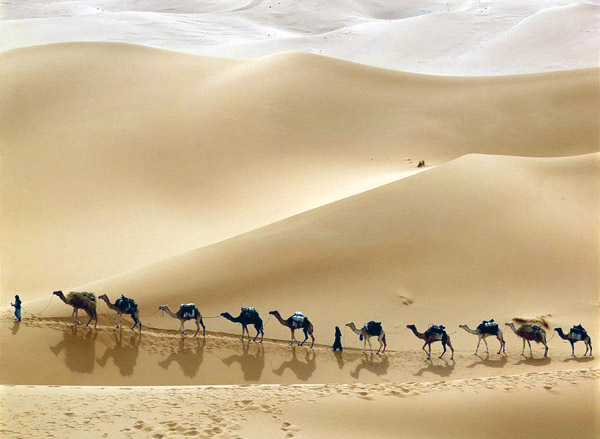
Dhows, the traditional sailing vessels of the region, carried frankincense to ports in Africa, Mesopotamia and India. While great caravans of 1,000 or more camels walked 2,000 miles north across the unforgiving Arabian Desert to ports on the Mediterranean Sea.

Camels can survive weeks without food or water, drawing on the fat stored in their humps. When necessary, they ate grains they carried or whatever they could find to graze on. Caravan drivers ate food packed by the camels, hunted, and shopped where they could on the way.

Tribal territories around the routes carved their share of the trade by charging tolls for passage and selling supplies.

Overnight camps were set up in the open desert or at caravanserai, the truck stops of the ancient trade routes. Song and dance around the fire recapped the highlights of each day’s journey, celebrated a step closer to completion and energized the company for the next leg.

The frankincense trade goes back at least 5,000 years. Egyptians and Mesopotamians were crazy for it, and the Greeks and Romans after them. It was used in religious ritual, in cosmetics, in medicine, even to embalm the dead. Today it’s used in pretty much the same ways and Dhofar still produces some of the highest quality frankincense in the world.

In Dhofar, you can visit remains of the ancient frankincense trade at Sumhuram and Al Baleed, both UNESCO World Heritage Sites near Salalah in southwestern Oman.

Check out our Oman tours at www.yallatours.com/oman.

NAME THAT COUNTRY Episode 115

Nakhal Fort pictured above is just one of many beautiful, grand old fortresses standing watch over our mystery country. It is located in the north of the country, in the foothills of the Western Hajar Mountains, about 75 miles west of the national capital Muscat.
The fort has been expanded and renovated many times over the centuries but its origin is pre-Islamic, so sometime before the 7th century. The fort wraps around the top of a natural prominence, giving it a unique shape that can appear both an imposing monument and an extension of the rugged landscape.

Can you name that county? 
See below for answers.

Continue reading