
Aspendos

Aphrodisias

Aphrodisias

near Aphrodisias

Fethiye
Aspendos
Aphrodisias
Aphrodisias
near Aphrodisias
Fethiye
The small town of Dalyan is tucked into a bend of the very bendy Dalyan River on Turkey’s southwest coast, about 50 miles east of Marmaris and 35 miles west of Fethiye. The whole area, around 300 square miles, was established as a Special Environmental Protection Area beginning in the late 1980s. Although the protected status revolves largely around the endangered loggerhead turtle, which nests on a local beach, the area encompasses wetlands, fresh water lakes, rivers, a brackish water zone and rich agricultural lands.
Click to see our Magnifcent Turkey tour,
which includes a visit to Dalyan.
 In southwestern Turkey, near the Mediterranean coast, a dozen or so ever-burning flames light up a patch of mountain slope, just as they have done for at least 2,500 years. This is Yanartaş, which means flaming rock in Turkish. The flames of Yanartaş are reached by climbing about 1km up a sometimes-steep path just outside the village of Çıralı, in the Olympos Beydağları National Park, about 80km from the city of Antalya.
The 540km Lycian Way trekking path passes through the site.
Yanartaş is thought to be the Mount Chimaera of Lycia, known to the ancients for its perpetual flames and probably the inspiration for the fire-breathing Chimera monster of Greek mythology. Ruins of the ancient city of Olympos are nearby and remnants of a temple of Hephaestus, ancient Greek god of the forge, lie below the field of flames.
The flames of Yanartaş are fueled mostly by the methane seeping through cracks in the rock. Their intensity varies depending on atmospheric and groundwater conditions. Typically, they are bigger in winter.
The park is open 24 hours a day and there is a small entrance fee. Dusk is the most popular time to visit Yanartas, but do take care. Sturdy walking shoes and a strong flashlight are essential. Bring marshmallows to toast over the flames!
Coffee came to Turkey in the 16th century, discovered in Yemen by an Ottoman official and introduced to the sultan Suleiman the Magnificent. Its popularity quickly spread but in the following century, it was deemed a drug and outlawed, upon pain of death, likely because the coffee house culture encouraged political discourse and potential dissent. Despite the harshest of penalties, the prohibition could not hold against the demand.
The name Turkish coffee refers to a method of preparation, the oldest there is, rather than a particular set of ingredients. The same or very similar drink is popular across the Middle East and eastern Europe, sometimes called Turkish coffee but often named for the country in which it is served.
So, here goes. It’s very simple. You need a special pot called an ibrik or cezve, usually copper with a wooden handle (I bought mine for well under $10), and a teaspoon.
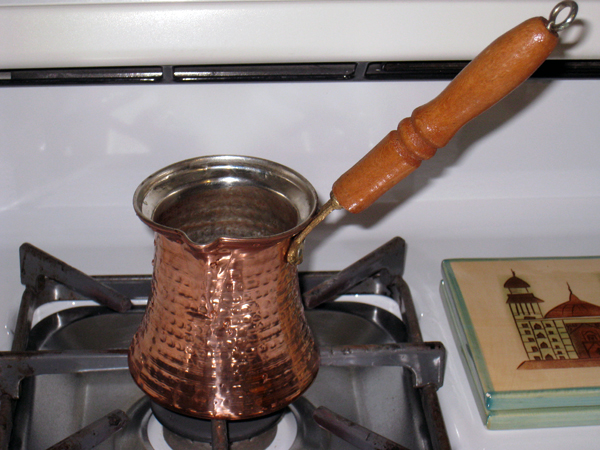
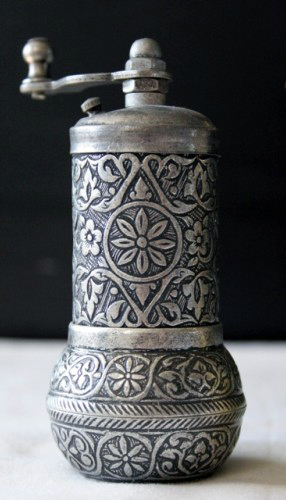
You can use any coffee but fresh ground beans are the best. The grind must be extremely fine, like powder. Few standard electric coffee grinders will do the job. A hand-crank pepper mill works great.
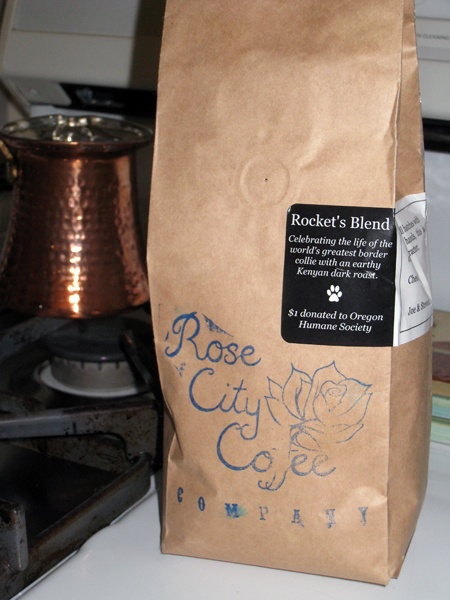
Measure cold water into the cezve with a demitasse cup and add 1-2 heaping teaspoons of coffee per cup of water. If you like it sweet, add sugar now. Stir until the coffee is mixed well into the water and the sugar is dissolved. Heat on medium until the coffee bubbles up to the rim of the pot, then remove from heat. (You have to watch this coffee while it brews, once it starts bubbling, things move fast. Look away for a second and you might have a very messy stove.)
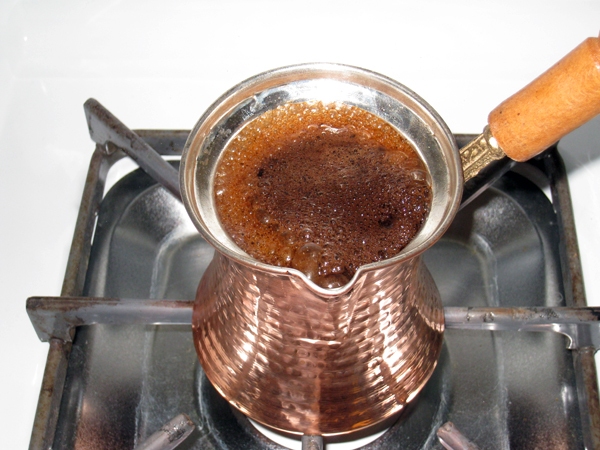
Once the coffee returns to a nonfoamy state, put it back on the heat and repeat. Let it foam up on the heat to near overflowing three times. Then serve. Don’t stir.
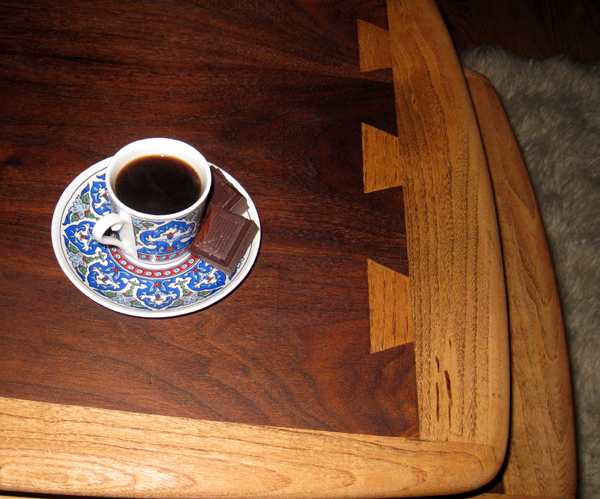
If you’d like to have Turkish coffee in Turkey or Morocco or Greece or Oman…we can help you with that. Visit our web site at www.yallatours.com.
 This spice bazaar, just steps from the Bosphorus shore, is one of the best known and largest covered markets in our mystery country’s most populous city. It has been the center of the city’s spice trade for over 350 years. The market is called the Egyptian Bazaar because its construction was financed by income from Egypt, which was an Ottoman province at the time.
.
Can you name that country?
See below for answers.
Some of the many wonders of Cappadocia, Turkey ~


Via Egnatia route map, Wikipedia
The Roman Via Enatia was built in the 2nd century BCE running west-east through Roman occupied lands from the Adriatic Sea to Byzantium (which became Constantinople a few centuries later, then Istanbul… https://youtu.be/Wcze7EGorOk). The road begins on the eastern coast of the Adriatic Sea at the Albanian town of Durres (ancient Dyrrachium) and heads eastward for about 700 miles through some very rugged terrain, including multiple mountain passes. The modern countries on the route are Albania, the Republic of Macedonia, Greece and European Turkey. All roads lead to Rome, as they say, but the Via Egnatia required a transfer to the Via Appia, which picked up on the other side of the Adriatic and continued to Rome.

the Via Egnatia at Philippi in Greece
The apostle Paul used the Via Egnatia to travel between Philippi and Thessalonica in northern Greece on his 2nd missionary journey. In the waning years of the Roman Empire, travel along the Via Egnatia, or any road in the Roman provinces for that matter, was dangerous and by the 5th century CE, the road was in serious disrepair. With the Byzantine Empire, centered in Constantinople, the road was restored and became an important trade route to western Europe. The Via Egnatia made up one leg of the crusader march from Europe to the Holy Land.
Like many highways through once-Roman territories, the modern Egnatia Odos runs parallel to its ancient namesake from Thessaloniki, Greece to the Turkish border.

Anatolian Civilizations Museum, Ankara

Ephesus

Bosphorus shore, Istanbul

Blue Mosque, Istanbul

hand painted bowls in the Grand Bazaar, Istanbul

Pamukkale is located in southwestern Anatolia, a 4 to 5-hour drive inland from coastal attractions such as Ephesus, Bodrum, Marmaris and Antalya. The closest major attraction is Aphrodisias, roughly halfway between the coast and Pamukkale (less than 2 hours driving). Pamukkale is known as the “Cotton Castle” because of its dramatic travertine terraces formed by hot-spring deposits of calcium carbonate. The Romans built the thriving spa town of Hieropolis here and besides the natural wonders there are some nice ruins to explore.
Can you name that country?
See below for answers.

Across the Muslim world, stories and anecdotes attributed to or about Nasreddin Hodja are as much a part of the collective consciousness as the Grimm’s Fairy Tales in Europe and North America.
Nasreddin was probably a real man who lived in Turkey in the 13th century. Some sources say he was born in Turkey, others that he moved there from Iran. In any case, it seems agreed that he lived and worked as a judge and teacher in or near the city of Konya in central Turkey. He is known for his sly wit, appreciation of the absurd, optimism and genial nature. The honorific Hodja refers to a wise teacher.
With a respectful good riddance to the historically harsh winter much of the US has endured this year, here’s a winter tale from Nasreddin Hodja.
One very cold winter night, Nasreddin Hodja and twelve of his neighbors were enjoying good company in the village teahouse. As they sipped their hot tea, the men took turns voicing their astonishment at the severe weather, each striving to outdo the last in the extent of their suffering. Nasreddin Hodja listened without comment to the tales of winter woe. When all eyes turned to him for his contribution on the topic, Nasreddin made a dismissive gesture and said, “My friends, what a bunch of whiners you are. Is it cold outside? I hadn’t noticed. In fact, this morning I remarked to my wife what a refreshing day it was, and left my coat at home.”
Nasreddin’s boastful contradiction was no surprise to his companions. He rarely let any statement go unchallenged. Life in the teahouse was never dull. “I find this weather so mild, I’m sure I could stay out in it all night long with no coat at all,” he said. “Let’s see about that,” replied one of the friends. “If you can spend the entire night outside without a coat, or any means of warmth beyond your own hot air, each of us will host you for dinner. If you cannot, you will host all of us.” It was a deal.
For the next eight hours, the village men watched from their windows as Nasreddin paced around the town square stomping his feet, blowing on his hands and hugging himself against the bitter night. His wife also kept watch and left a candle burning in the window as a sign of her support. When the faint sun finally peeped over the horizon, Nasreddin went inside, feeling tired but triumphant, and not a little numb.
Later that day, when all the men were gathered in the teahouse, Nasreddin asked who would be the first to invite him for dinner. Altogether they responded, “It is you who owe us dinner!” “How do you figure that?” he said. “I know you saw me outside all night.” “Oh, we saw you outside; this is true. But we also saw the candle burning in your window. Surely that provided you some warmth.” Nasreddin’s expression told his friends what he thought of their implausible argument, but he agreed to feed them dinner anyway.
A few days later Nasreddin welcomed his friends to his home. As dinner was not yet ready, he made them comfortable in the sitting room and they chatted about the weather and politics and local gossip, just as they did whenever and wherever they gathered. After more than an hour, they were getting pretty hungry and asked Nasreddin if he meant to feed them anytime soon. Rising from his chair, he asked them to join him in the kitchen to check the progress of their dinner.
In the kitchen, they found a cast iron pot filled with rice, chicken and vegetables hanging from a beam over a burning candle. “What are you thinking?” they exclaimed. “This small candle will never provide enough heat to cook a pot full of food!” “Huh,” said Nasreddin, cocking his head and knitting his brow in mock wonderment. “You say this candle, mere inches from the pot, is not hot enough to cook the food, but the very same candle was hot enough to warm me all the way across the square?” The friends had no rebuttal and all repaired in good humor to the teahouse for some food that had been thoroughly cooked on a blazing fire.
 The Ya'lla Blog